Must agencies get White House approval before testifying to Congress? What the Scharf memo does
A memo from White House counsel Will Scharf routes agency testimony decisions through two West Wing offices ahead of a Democratic Congress. Here is what it covers, what is unclear, and what federal law says about employees talking to Congress.

By Jonah Reyes, Politics & Policy
· 4 min read
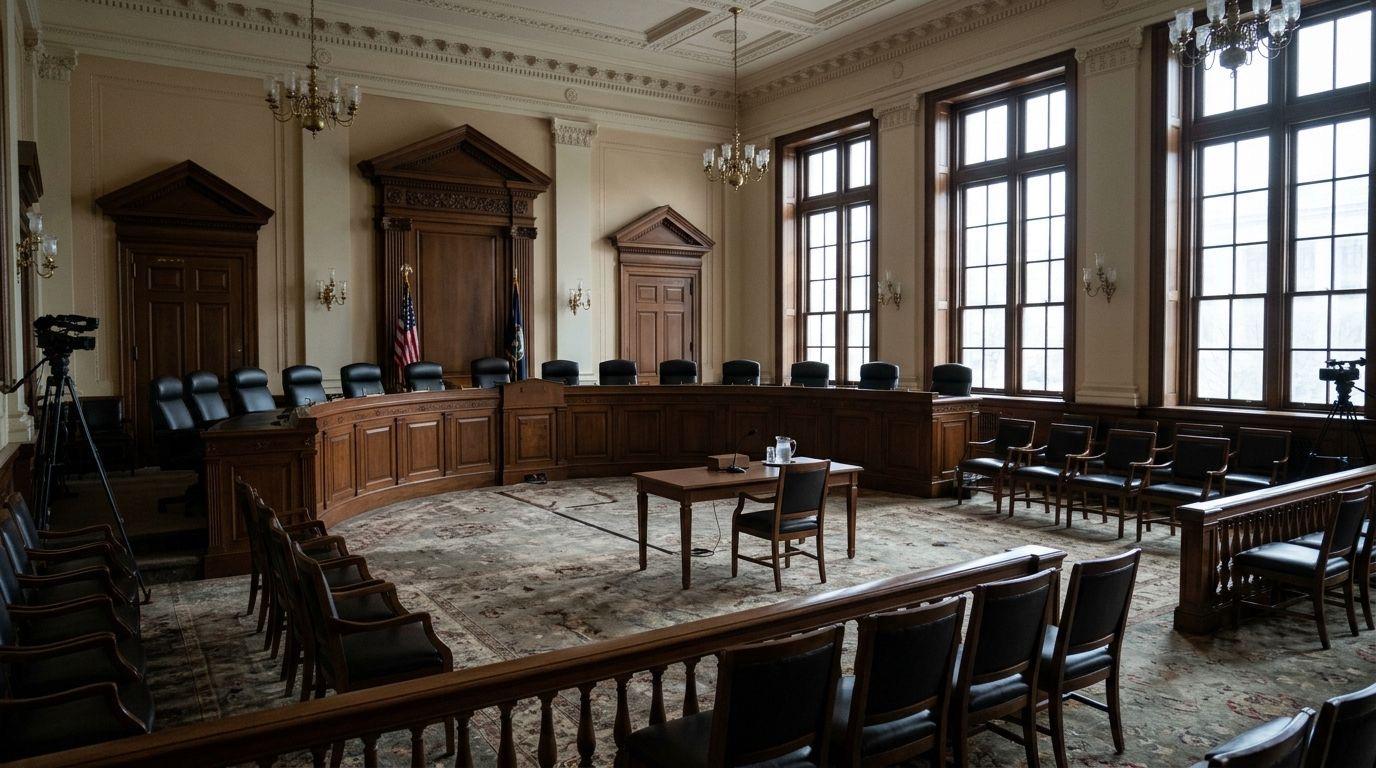
Federal agencies and executive departments may no longer agree to testify before a congressional committee until two White House offices approve, according to a memo from White House counsel Will Scharf that PBS News obtained on Monday. The offices are White House legal counsel and legislative affairs. The directive arrives as Democrats prepare to take control of Congress in January with an oversight agenda aimed at the administration.
The short version
A memo from White House counsel Will Scharf tells every federal agency to get sign-off from two White House offices before agreeing to testify to Congress. A White House official says the step keeps requests reasonable. Democrats, who take over in January, say Congress does not need the White House's permission to investigate.
What does the memo require?
PBS News reports that Scharf is directing all federal agencies and executive departments to get approval from the White House legal and legislative affairs offices before they agree to testify before a congressional committee. PBS published the memo as an image, so this account rests on PBS's description of it. Whether it also covers informal briefings, staff interviews or document requests is not clear from that description.
Why is it landing now?
Both chambers are headed for Democratic leadership. Rep. Robert Garcia of California, the top Democrat on the House Oversight Committee and the likely chair next year, has warned Trump officials to "lawyer up," the Associated Press reported.
Scharf answered in a letter dated Monday, November 9. Threats to executive branch officials meant to deter them from public service, he wrote, "may cross the line into blatant criminality." Garcia replied that Congress's investigative powers do not need the "permission of the White House," and that the letter suggested Trump "has something to hide." The AP lists the Democratic targets as Epstein investigation handling, immigration enforcement operations, the White House ballroom and other construction projects, and the Trump family's mineral deals and crypto dealings.
What does the White House say?
A White House official told PBS News that the administration "will not be extorted, intimidated, or threatened into submission by politically motivated baseless investigations." The same official said the approval process ensures reasonable requests are respected and that agencies can still meet legitimate oversight requests while keeping Cabinet officials focused on their jobs.
The official pointed to four letters House Democrats have sent to agencies, including the Department of Homeland Security, asking that documents be preserved. The official called those letters "exorbitant demands." PBS describes them as document-preservation requests, not demands for testimony.
Has a White House done this before?
Something close, once. In May 2020 the Office of Legislative Affairs sent House and Senate staff directors a memo saying no coronavirus task force members, or their key deputies, could accept hearing invitations that month without the express approval of the chief of staff. NTD reported that Anthony Fauci, Deborah Birx and Robert Redfield were among those kept from testifying that month.
The 2020 memo covered one task force for one month, and it said other departments and witnesses could still accept invitations. PBS's account of the 2026 memo describes no such limit on who is covered or for how long. This is the only comparable memo found in the sources reviewed, not a survey of every administration.
What does federal law say about employees and Congress?
Title 5 of the U.S. Code, section 7211, says the right of employees, individually or collectively, to petition Congress or to furnish information to either House, a committee or a member "may not be interfered with or denied." Congress wrote that into the civil service law in 1978.
The statute speaks of employees' rights. The memo, as PBS describes it, speaks of agencies deciding whether to agree to testify. Whether the two collide depends on the memo's operative language and on how agencies apply it to an individual employee who goes to a committee on their own. None of the reporting reviewed shows a court or the Justice Department addressing that question for this memo.
What to watch in January
Attorney General Todd Blanche said in an interview on CNN that aired last Sunday that "there could be" a crime to investigate if Democratic rhetoric turned threatening. Later in the week, in Missouri, he said Congress has oversight authority ("It always has, it always will") and that the Justice Department will keep working with it through subpoenas and letters. The new Congress is seated in January. The first real test comes when a Democratic chair asks an agency head to appear and the answer is that approval is pending.
- Will Scharf
- congressional oversight
- White House counsel
- Robert Garcia
- House Oversight Committee
Sources
- 01Read the full White House memo requiring agencies to get approval before testifying in front of Congress, PBS Newspbs.org
- 02White House confronts Democrats over planned probes, claiming possible criminality, Associated Press via WCAXwcax.com
- 035 U.S. Code section 7211, Employees' right to petition Congress, Cornell Legal Information Institutelaw.cornell.edu
- 04White House Coronavirus Task Force Can't Testify to Congress Without Approval: Memo, NTDntd.com
Corrections
No corrections have been made to this article.

About the reporter
Politics & Policy Reporter, Trestlewire
The most consequential thing I ever watched a legislature do happened in a committee room in Santa Fe at a quarter past eleven at night, in 2003, with four reporters present and three of them asleep. A single amendment changed who qualified for a state program, and almost nobody noticed for a year. I have been reading bills line by line ever since, because that is where the story usually is.
Read full bio and all stories →The Morning Wire
The day’s reporting, in your inbox before nine.
Free. Unsubscribe any time. We never share your address.