Fed chair Warsh lays out three AI scenarios, one with falling stock valuations
The Fed's staff has begun modeling how AI could change growth, jobs and equity prices. Warsh called the cases illustrations, not forecasts, and gave no rate guidance.

By Priya Kanth, Business & Economy
· 4 min read
Three is the number of AI scenarios Federal Reserve Chair Kevin Warsh put in front of a San Francisco conference on Monday, and only one of them is good news for both workers and shareholders. In the other two, unemployment rises, and in one of them stock valuations fall first.
What the Fed said about AI
Fed staff have started modeling how AI could change growth, jobs and equity prices, Warsh said on November 16. He called the three scenarios illustrations, not forecasts, and gave no guidance on interest rates. For households, the practical point is that the central bank now treats a drop in stock prices after heavy AI spending as a case to plan for.
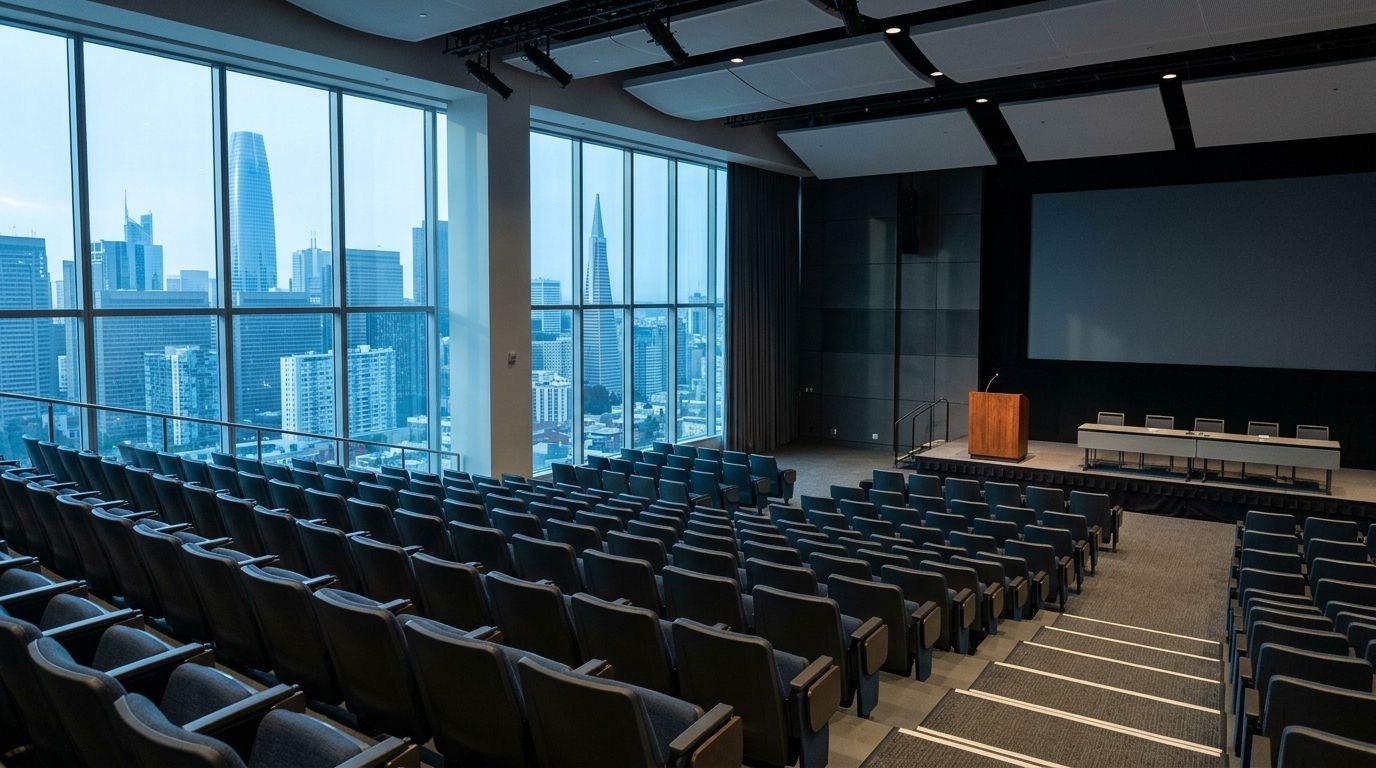
Warsh spoke at the opening of the Productivity and Jobs Task Force Conference, hosted by the Federal Reserve Board and the Federal Reserve Bank of San Francisco. He said it was his first visit to a Reserve Bank as chairman, and that the task force is one of five he has convened. Marc Andreessen, the co-founder of the venture firm Andreessen Horowitz, is among its leaders and joined Warsh for the closing fireside chat, according to CNBC.
The three paths in the prepared remarks
In the first, AI raises productivity and the gains reach both labor and the owners of capital. Real GDP growth stays above its long-run average and the economy remains close to full employment. In the second, growth still runs above average, but some jobs are displaced rather than complemented, and Warsh said widespread automation combined with labor market frictions could push joblessness above full-employment levels.
The third is the one markets will read closely. Warsh described a case where AI disappoints: after significant capital investment and stock market gains, expected returns turn down and equity valuations fall, producing a slowdown and a more notable rise in unemployment. In time the economy recovers, he said, but without the productivity gains.
“These are illustrative scenarios, not forecasts.”
He added that the Board's staff has begun evaluating contingencies with stylized, model-based frameworks, and that the Fed's role is neither advocacy nor opposition. The widespread adoption of the technology, he said, will have a significant effect on the economy with implications for monetary policy "down the road." The prepared text names no rate decision, no date and no probability for any scenario.
What the productivity data shows so far
The case for the first scenario rests on a number the speech says has not arrived yet. Warsh said productivity growth has been reasonably strong in recent quarters but has not broken out definitively to the upside. He cited a paper by economists Nicholas Bloom, Charles Jones and coauthors finding that research effort has risen more than 20 times since the 1930s while research productivity fell by an even larger amount. His argument is that AI could change that by speeding up idea generation.
That is an argument about mechanism, and the speech offers no new data to test it. The same text calls AI "an entirely new force in economic life and society" and uses the term "super intelligence" throughout, a phrase CNBC says follows an order from President Donald Trump in September for the federal government to use it almost exclusively in place of AI.
A market already moving
Stocks were already lower on Monday. At 11:31 a.m. Eastern, the Motley Fool's midday report had the Nasdaq Composite down 1.34 percent at 24,799, the S&P 500 down 0.99 percent at 7,487 and the Dow Jones Industrial Average down 0.60 percent at 52,032. Its page header showed steeper losses for all three, and the article does not explain the gap. That report does not mention Warsh or the Fed, so the decline cannot be pinned on the speech from the available timing.
Nvidia reports earnings on Tuesday, November 17, and its shares were down 3.43 percent at $157.27 in the same report's ticker. Warsh has moved AI-linked stocks before. After the Fed's July 29 meeting, Benzinga reported that AI, semiconductor and data center names fell within 30 minutes of his remarks, with the SOXL semiconductor ETF down 6.37 percent. That was a rate-policy message. Monday's speech was not.
Warsh put no probability on the disappointment case. He told the room he expects "much more clarity with the passing of time," and that the Fed's aim on Monday was to ask the right questions.
- Kevin Warsh
- Federal Reserve
- artificial intelligence
- unemployment
- stock valuations
Sources
- 01Opening Remarks, Productivity and Jobs Task Force Conference, Federal Reserve Boardfederalreserve.gov
- 02Fed Chairman Kevin Warsh stresses importance of AI to economy, but says it could 'disappoint', CNBCcnbc.com
- 03Stock Market Midday, Nov. 16, The Motley Foolfool.com
- 04Warsh's hawkish remarks hit AI stocks, July 29, Benzinga via Webullwebull.ca
Corrections
No corrections have been made to this article.

About the reporter
Senior Business & Economy Reporter, Trestlewire
I was an equity research analyst for five years and have been a financial reporter since 2000. I covered the end of the dot-com bubble from a markets desk, spent the autumn of 2008 reading bank filings at two in the morning in Chicago, and have written about every Federal Reserve rate cycle since. The lesson from all of it is short: the number comes first, and the story is the explanation for the number.
Read full bio and all stories →The Morning Wire
The day’s reporting, in your inbox before nine.
Free. Unsubscribe any time. We never share your address.