Anthropic prices IPO at $83, but only 825 million shares trade against 15.5 billion locked up
The price beat the range. The filing shows a small float, $26 billion of supplier-held stock with no lock-up, and a founder share that holds half the votes.
By Theo Lindqvist, Technology & Business
· 4 min read
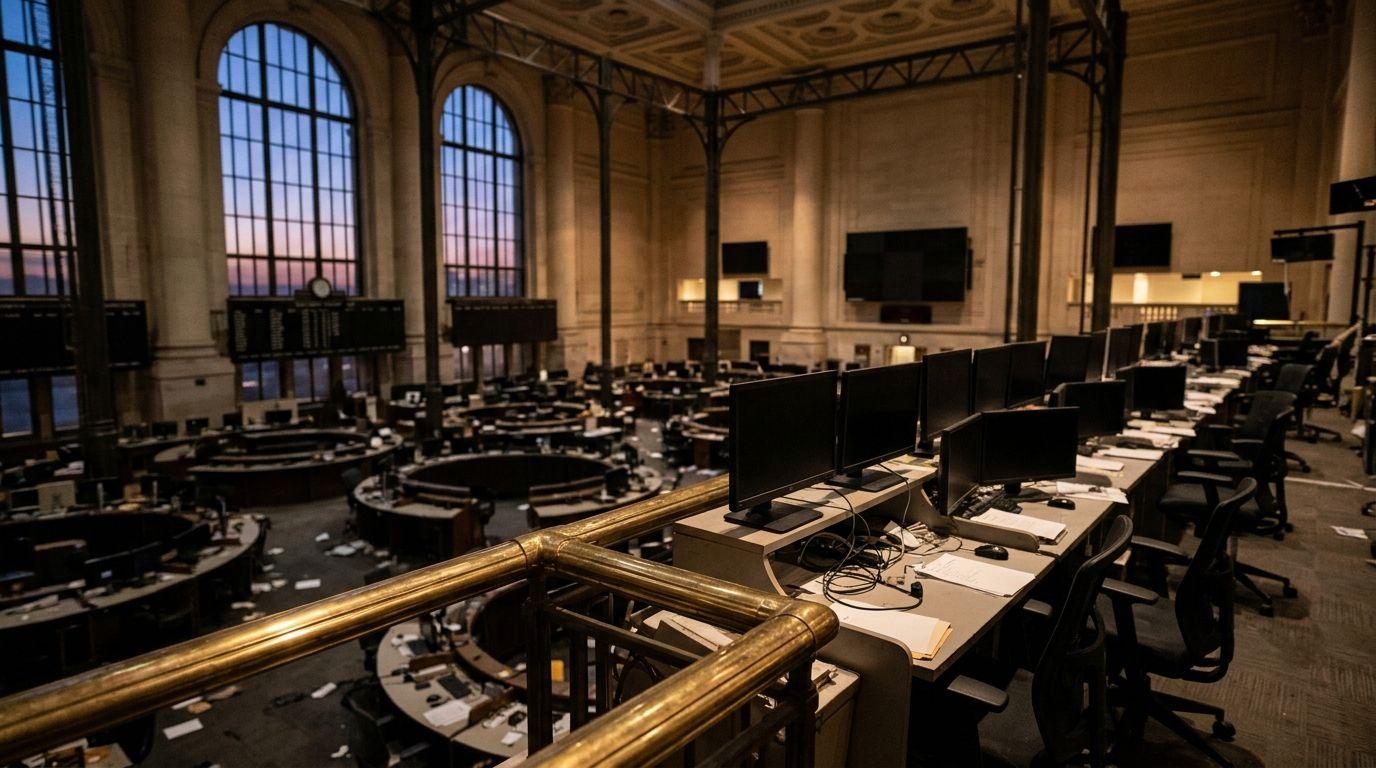
Anthropic priced its IPO at $83 a share on Wednesday, above the $70 to $78 range it set last week, a person familiar with the deal told CNBC. The price is the headline. The filing underneath it is the more useful document: about 825 million shares are going to the public, while insiders hold roughly 15.5 billion shares that they have agreed not to sell for 180 days or longer.
Stock is expected to start trading on Nasdaq on Thursday under the ticker ANT. By my arithmetic, the shares on offer equal about 5 percent of the locked-up pile. That ratio will shape how the first months of trading go.
The short version
Anthropic priced at $83, above its range, and would raise about $68.5 billion if the planned 825 million shares all sell. Insiders hold about 15.5 billion more shares under lock-ups of 180 or 365 days. A separate $26 billion of stock sold to chip and cloud suppliers carries no lock-up. The final share count and valuation are not confirmed.
A thin float against a deep pile
The amended registration statement Anthropic filed last week says its directors, officers and holders of substantially all of its stock have signed lock-up or market standoff agreements. Those cover about 15.5 billion Class A shares, counting converted Class N stock, equity awards and convertible notes. Most are restricted for up to 180 days. The seven co-founders and holders of more than 0.5 percent of the company face up to 365 days.
At $83, that locked-up block would be worth roughly $1.3 trillion, my math, against about $68.5 billion on offer to the public. A small float means a handful of buyers or sellers can move the price. That cuts both ways on the first day.
Not all of the locked-up stock stays put. The filing says 3.6 billion shares under the 180-day terms may become eligible for sale early, including up to 10 percent of the locked shares held by non-founder directors, officers and current and former employees. Those sales can begin on the first trading day. Some insider supply is available at the open.
The $26 billion with no lock-up
Alongside the IPO, Anthropic is selling $26 billion of nonvoting Class N stock at the IPO price to AMD, Broadcom, Google, Micron, Microsoft, Nvidia and TSMC, according to the company's filing as reported by CNBC. The filing states that these shares are not subject to any lock-up or standoff agreement.
They are still restricted securities. They can be resold only through a registration statement or an exemption such as Rule 144, and some buyers may hold registration rights. The filing itself warns that sales of these shares, or the perception that sales may occur, could push the stock down.
Follow the money on who is buying. CNBC reported that Anthropic purchases computing systems from Nvidia, Google, Amazon and AMD, and that Amazon and Google each hold stakes worth more than $100 billion. Several of the placement buyers are also suppliers. I did not trace in the filing how much of the new cash flows back to them as hardware orders.
Who votes, and who does not
Public buyers get Class A stock, one vote per share. A single Class F share, held by an entity the co-founders control, carries 50.1 percent of the total voting power, and the filing describes Anthropic as a controlled company under Nasdaq rules. Class N has no vote. A separate Class T share lets a long-term benefit trust elect a majority of the board.
What the demand and the numbers say
Demand was heavy. CNBC reported institutional indications of about $400 billion and retail interest near $100 billion, though those orders are nonbinding. Anthropic targeted roughly 20 percent of the offering for retail buyers, CNBC reported earlier, against the 5 to 10 percent typical of an IPO.
The business numbers are large. For the nine months ended September 30, the prospectus shows $33.24 billion in revenue, up roughly 1,200 percent from a year earlier. Annualized run-rate revenue reached about $81 billion at the end of October, up $10 billion in a month. The net loss was $104 billion, though the company says most of that reflects changes in the fair value of convertible notes and derivatives. Crunchbase News put the operating loss at $1.3 billion, down from $5.2 billion.
The valuation is less settled. CNBC put it above $1.4 trillion on a fully diluted basis, and Motley Fool calculated about $1.5 trillion. Ahead of pricing, shareholders told CNBC that even $1.5 trillion looked like a stretch, with the company having once aimed near $2 trillion.
Several figures are not final. Motley Fool reports other outlets expect the offering to be upsized, and Anthropic has not disclosed a final share count or proceeds. The final prospectus filed after pricing may differ from the amended filing used here. The next dates to watch are Thursday's opening trade and, by my count from the pricing date, mid-May 2027, when the first 180-day lock-ups begin to expire.
Sources
- 01Anthropic prices IPO at $83 per share, above expected range, CNBCcnbc.com
- 02Anthropic sets IPO price range of $70 to $78, CNBCcnbc.com
- 03Anthropic, PBC Form S-1/A, U.S. Securities and Exchange Commissionsec.gov
- 04Anthropic prices IPO shares at $83, above range, Crunchbase Newsnews.crunchbase.com
- 05It's official: Anthropic prices its IPO at $83 a share, Motley Foolfool.com
- 06Anthropic weighs bigger IPO as investor demand nears $500 billion, International Business Timesibtimes.com
Corrections
No corrections have been made to this article.
About the reporter
Senior Correspondent, Technology & Business, Trestlewire
I got my first newsroom job in Seattle in 1999, which means I learned the trade covering companies that went public on a Tuesday and stopped existing by the following spring. That was a useful education. Since then I have covered the search wars, the rise of the app stores, the chip shortages, the antitrust cases against the biggest platforms, and the current argument about what artificial intelligence is actually worth.
Read full bio and all stories →The Morning Wire
The day’s reporting, in your inbox before nine.
Free. Unsubscribe any time. We never share your address.