Paris Opens the Olympics on the Seine, With Athletes on Boats and Rain Falling on the Crowds
PARIS, July 26 - Paris opened the Summer Olympics on Friday with a ceremony held on the Seine River instead of in a stadium, sending thousands of athletes down the water on boats while rain came and went over the crowds.

By Sana Whitfield, Culture, Science & Life
· 2 min read
At a glance
- •The U.S. flag bearers were LeBron James and tennis player Coco Gauff, both in plastic ponchos.
- •French judo champion Teddy Riner and runner Marie-Jose Perec lit the cauldron near the Louvre.
- •Chief organizer Tony Estanguet said the aim was "to show to the whole world and to all of the French that in this country, we're capable of exceptional things."
- •Medals will be decided in 329 events across 32 sports over the coming days.
The short answer
PARIS, July 26 - Paris opened the Summer Olympics on Friday with a ceremony held on the Seine River instead of in a stadium, sending thousands of athletes down the water on boats while rain came and went over the crowds. It was the city's first Summer Games in a century. The parade ran about 6 kilometers, nearly 4 miles, with athletes on 85 boats.
PARIS, July 26 - Paris opened the Summer Olympics on Friday with a ceremony held on the Seine River instead of in a stadium, sending thousands of athletes down the water on boats while rain came and went over the crowds.
It was the city's first Summer Games in a century. The parade ran about 6 kilometers, nearly 4 miles, with athletes on 85 boats. They passed through curtains of water falling from the Austerlitz Bridge, a nod to the fountains of Versailles. Greece led the way as the birthplace of the ancient Games, followed by the Olympic Refugee Team and then the other nations in French alphabetical order.
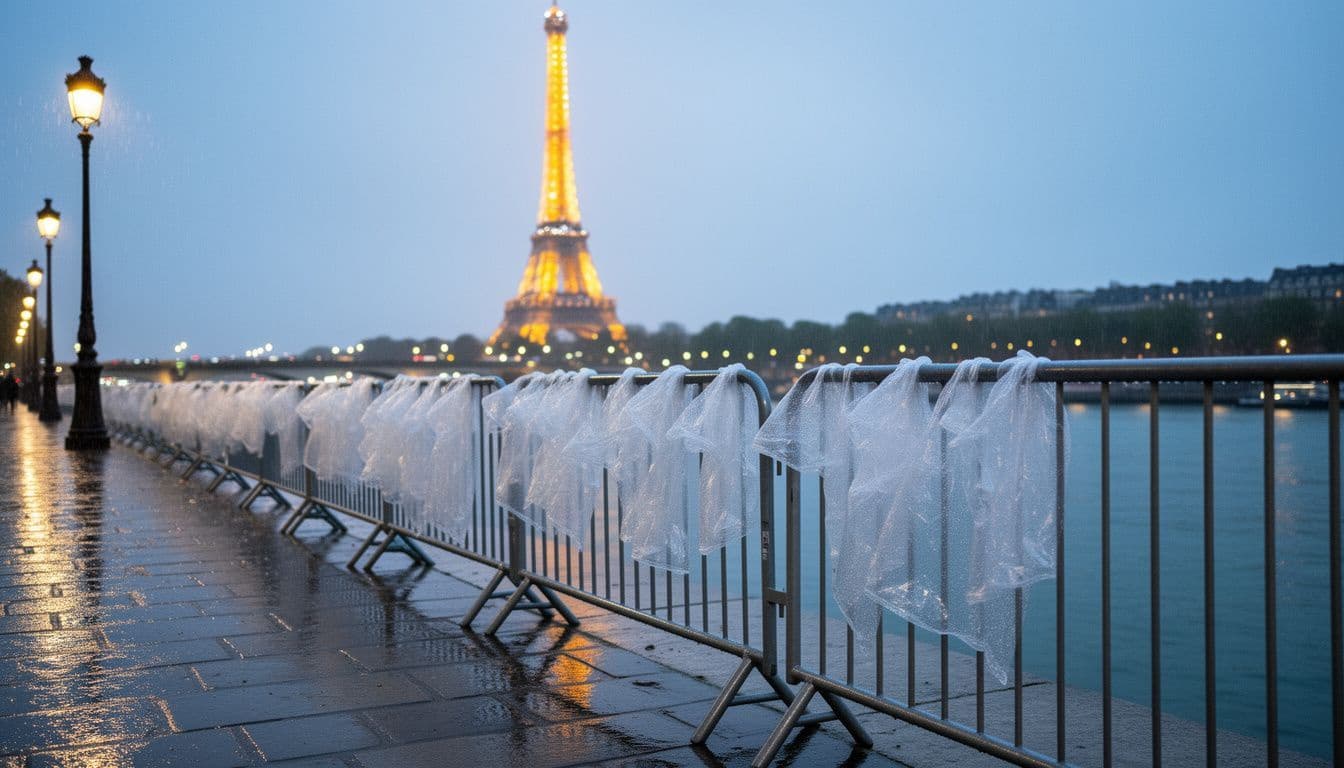
The U.S. flag bearers were LeBron James and tennis player Coco Gauff, both in plastic ponchos. "The rain can't stop us," James said. The showers grew heavier as the night went on. Organizers said the weather forced them to drop some elements judged too dangerous on slippery surfaces.
The show mixed music, dance and film along the river. Lady Gaga sang in French in a prerecorded segment. Aya Nakamura performed "Djadja" with a Republican Guard band. Ten golden statues of female pioneers rose from pedestals beside the water, among them Olympe de Gouges, who wrote the 1791 Declaration of the Rights of Women and the Female Citizen.
French judo champion Teddy Riner and runner Marie-Jose Perec lit the cauldron near the Louvre. It was attached to a giant balloon that rose into the night sky. Celine Dion closed the show from the Eiffel Tower, in her first live performance since she was diagnosed with stiff person syndrome at the end of 2022.
There were rough spots. The five-ring Olympic flag was raised upside down at the Trocadero. Texan Tony Gawne, who paid $6,000 for two tickets, said that "Paris has been great, anything to do with the Olympics and dissemination of information has been horrible."
Why it matters: Holding a ceremony on a river is a bet on the city itself. Hundreds of thousands of spectators lined the banks, which made security a heavy task. Large areas of central Paris were fenced off, and a no-fly zone covered 150 kilometers around the city. Authorities were also investigating suspected sabotage of France's high-speed rail network.
Chief organizer Tony Estanguet said the aim was "to show to the whole world and to all of the French that in this country, we're capable of exceptional things."
Medals will be decided in 329 events across 32 sports over the coming days.
Sources
- 01Paris dazzles with a rainy Olympics opening ceremony on the Seine River, AP via WHYYwhyy.org
- 02Paris Olympics kicks off with ambitious but rainy opening ceremony on the Seine River, AP via Boston.comboston.com
- 032024 Summer Olympics opening ceremony, Wikipediaen.wikipedia.org
Corrections
No corrections have been made to this article.

About the reporter
Culture, Science & Life Reporter, Trestlewire
I started a science blog in 2005, back when that was a slightly embarrassing thing to admit at parties, mostly to complain about how badly sleep studies got summarized in the papers. It turned into a job. I have been writing about culture and the science of everyday life ever since, through the arrival of social media, the smartphone, the wellness boom, and roughly four hundred viral productivity hacks.
Read full bio and all stories →The Morning Wire
The day’s reporting, in your inbox before nine.
Free. Unsubscribe any time. We never share your address.