Told to Resist an Australian Accent, Americans Did. Left Alone, They Still Dropped the R
A 136-person study found museum visitors could dial accent imitation up or off on command. With no instructions, one feature leaked through: the missing r.

By Sana Whitfield, Culture, Science & Life
· 4 min read · Updated
Key Takeaways
- •In a 2026 Laboratory Phonology study, 136 American English speakers copied all five tested features of an Australian talker when asked to imitate her, and none when asked not to.
- •With no instructions, the group copied only one feature, the dropped r in NEAR-class words, while 22 of 136 participants (16 percent) mentioned that r afterward.
- •The sample was small and narrow: 115 of 136 participants were white museum visitors, and there was a single Australian female model talker.
- •The result conflicts with a 2015 Frontiers in Psychology study that found some imitation even among people told to avoid it, and the authors could not pin down why.
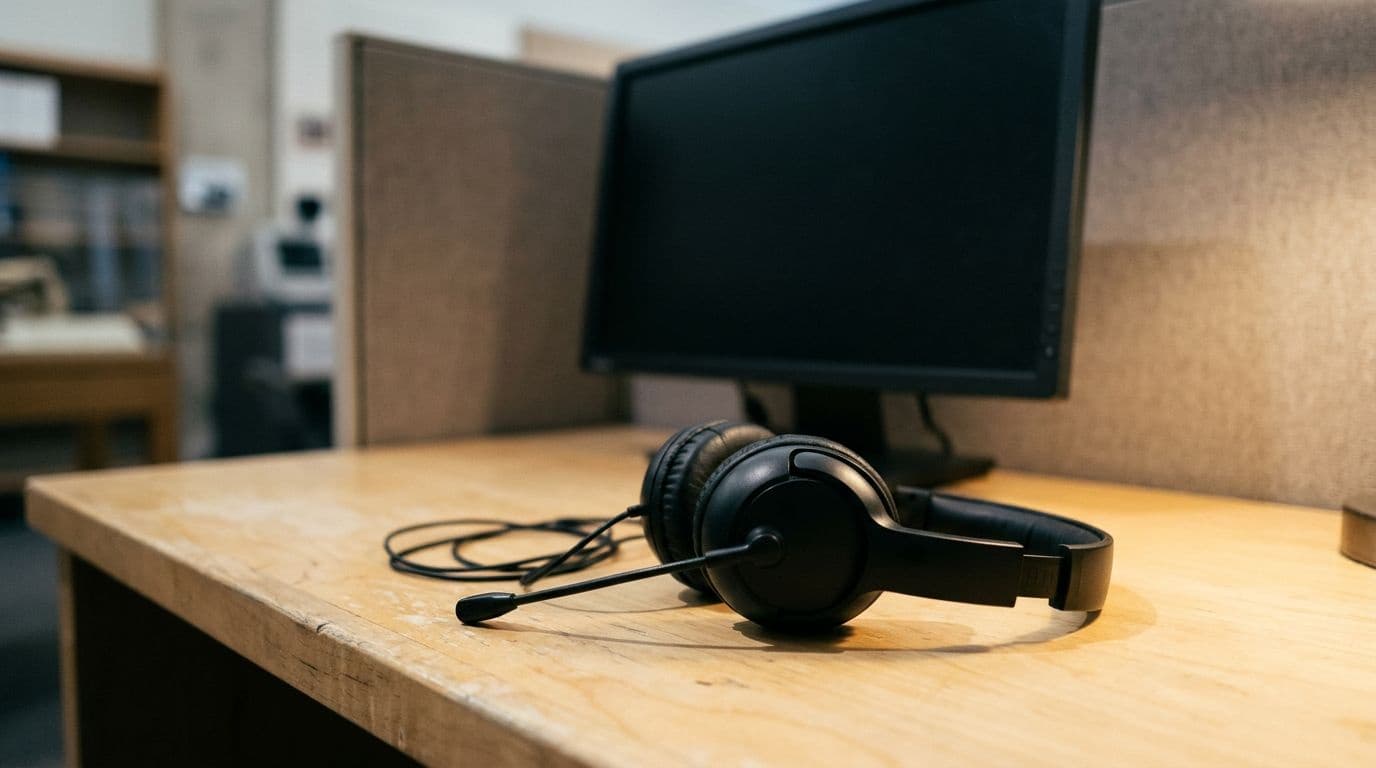
The headphones are over-ear, the word BATH is on the screen, and a young Australian woman says it first, with an a that sits farther back in the mouth than the American version. Now the visitor, one of 236 people recruited at an American science museum, has to say it back. The only thing separating the three groups in the room is a single sentence of instructions.
One group was told to imitate her as closely as possible. One was told to say each word the way they normally would, not the way she says it. One was told nothing. In a paper published in Laboratory Phonology in 2026, linguists Kathryn Campbell-Kibler and C. G. Clopper report that the sentence mattered a great deal.
The short answer
American English speakers who repeated words after an Australian voice copied all five tested dialect features when asked to imitate, copied none when asked not to, and copied only the dropped r when given no instructions. In this 136-person lab study, accent imitation looked far more controllable than the label automatic suggests.
What 136 people did with one sentence
After exclusions for reasons such as speech or hearing disorders, unfinished questionnaires and technical failures, the analysis kept 136 of the 236 recruits: 43 in the no-instruction group, 42 in the imitate group and 51 in the avoid group. Each person first read a word list aloud with no audio, then repeated the same words after hearing the Australian talker. The team measured vowel quality in the BATH, TRAP, KIT and PRICE word classes, plus whether the talker's r in NEAR-class words was pronounced, across 10,878 usable recordings.
The imitate group shifted toward her on every feature. The avoid group shifted on none. Participants who were told nothing moved on one: the dropped r, the sound the paper's statistical tests flagged as the single feature that leaked into their speech.
0 of 5
dialect features copied by the avoid group
The imitate group converged on all five. The no-instruction group converged on the dropped r only.
The sounds people noticed were the sounds they copied
After the task, a paper questionnaire asked what stood out about how the woman spoke. Twenty-one people (15 percent) brought up the broad a in BATH, and 22 (16 percent) brought up the missing r. One wrote that her r's were not hard American r's. Another described the a as pronounced like aww.
Those two sounds were also the most strongly imitated when people were asked to copy her. And in an exploratory follow-up, participants who had mentioned one of those features copied it more, in the imitate group for both and in the no-instruction group for the broad a. The authors read this as evidence that sounds with social meaning, the ones people already have opinions about, are the ones most likely to move.
Where the result gets shaky
Start with the crowd. Of the 136 analyzed, 115 identified as white, the mean age was 33, and all of them were museum visitors. There was one model talker, one Australian woman in her 20s from Perth, so nothing here says how people respond to a Texan, a Glaswegian or a podcast host.
The avoid group also did something odd on one vowel. They moved away from the talker on KIT, which would be a rare divergence. The authors call that result possibly spurious. The gender analysis, which found women converging more than men, was post hoc and added at a reviewer's suggestion, and the authors say its implications are unclear.
A clash with earlier work
The bigger wrinkle is a conflict. Campbell-Kibler, then at Ohio State, and Abby Walker published a 2015 study in Frontiers in Psychology in which women from Christchurch, New Zealand and Columbus, Ohio repeated words after speakers from four regional dialects. The new paper describes that line of work as finding some imitation even among people told to avoid it, with virtually the same population and the same model talker. This time the avoid group showed none.
The authors list two differences but no verdict. In the earlier study, participants were told it was a dialect identification task and heard multiple voices, with the Australian talker never first. Here she went first and alone. Either setup may have shifted where people put their attention.
Why the word automatic is under pressure
Researchers often describe imitation in word-repeating tasks as automatic, a tight link between hearing a sound and producing it. This result pushes against that. People could turn the copying up on request and, in this sample, shut it off. The authors also leave room for a less tidy reading: some of the copying in the no-instruction group may have been deliberate play, not reflex.
There is also no conversation here. Nobody was talking to a person they wanted to impress, so this says little about the friend who comes back from a semester abroad with a new vowel. What it does say is narrower and a bit more charming: put a stranger in headphones, ask nicely, and they can do an accent on command.
Frequently Asked Questions
- Do people automatically copy accents they hear?
- Not entirely, according to a 2026 Laboratory Phonology study of 136 American English speakers. They copied an Australian talker's vowels when asked to, copied none of the five tested features when asked not to, and copied only the dropped r when given no instructions.
- How big was the study?
- Researchers recruited 236 museum visitors and analyzed 136: 43 given no instructions, 42 asked to imitate and 51 asked to avoid imitating. They measured 10,878 recorded words.
- Does this prove how accents spread in real life?
- No. It used a recorded voice, one Australian talker and a word-repeating task with no conversation, and 115 of the 136 participants were white. The authors treat several findings as exploratory.
- accent imitation
- phonetic convergence
- Laboratory Phonology
- Kathryn Campbell-Kibler
- C. G. Clopper
- sociolinguistics
Sources
- 01Cognitive control in cross-dialect phonetic imitation, Laboratory Phonologyjournal-labphon.org
- 02Repeat what after whom? Exploring variable selectivity in a cross-dialectal shadowing task, Frontiers in Psychologyfrontiersin.org
Corrections
No corrections have been made to this article.

About the reporter
Culture, Science & Life Reporter, Trestlewire
I started out writing about science — real lab-coat, peer-reviewed, methods-section science — and I moved into culture coverage because I kept noticing that the internet, not the lab, is often where science actually plays out in people's daily lives now. A study on sleep or attention or habit formation used to sit in a journal for a decade before anyone outside the field read it. Now it shows up in a group chat by Thursday, usually stripped of every caveat that made it interesting in the first place.
Read full bio and all stories →