Ever Given Freed From Suez Canal After Six Days, Traffic Starts to Move
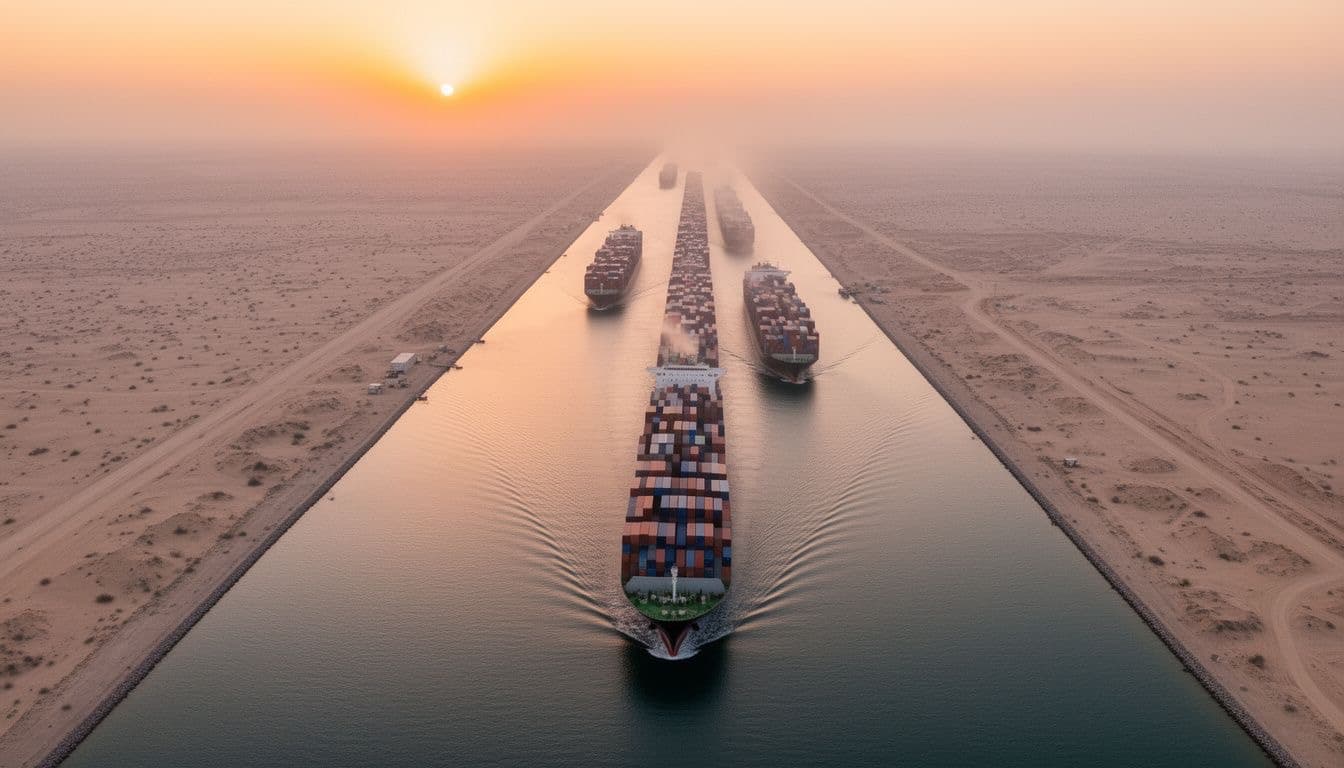
SUEZ, Egypt, March 29 - The container ship Ever Given was freed on Monday after six days wedged across the Suez Canal, ending a blockage that stopped traffic through one of the world's busiest waterways and left hundreds of vessels waiting at either end.

By Priya Kanth, Business & Economy
· 2 min read
What to know
- •Tugboats and dredgers worked through the weekend to loosen the 400 meter, 224,000 ton ship from the canal bank.
- •The Ever Given ran aground last Tuesday during a sandstorm with high winds, turning sideways and blocking both directions.
- •Roughly 12 percent of world trade passes through the canal, according to industry estimates.
- •Economists say the delays will not cause immediate shortages, but they come at a time when global supply chains are already strained after the pandemic.
The short answer
SUEZ, Egypt, March 29 - The container ship Ever Given was freed on Monday after six days wedged across the Suez Canal, ending a blockage that stopped traffic through one of the world's busiest waterways and left hundreds of vessels waiting at either end. Tugboats and dredgers worked through the weekend to loosen the 400 meter, 224,000 ton ship from the canal bank. The peak of a high tide gave rescue crews the extra lift they needed.
SUEZ, Egypt, March 29 - The container ship Ever Given was freed on Monday after six days wedged across the Suez Canal, ending a blockage that stopped traffic through one of the world's busiest waterways and left hundreds of vessels waiting at either end.
Tugboats and dredgers worked through the weekend to loosen the 400 meter, 224,000 ton ship from the canal bank. The peak of a high tide gave rescue crews the extra lift they needed. The vessel was partly refloated at dawn and was pulled free later in the afternoon, according to the company that provided the salvage team.
The Ever Given ran aground last Tuesday during a sandstorm with high winds, turning sideways and blocking both directions. Strong winds in a sandstorm are believed to have played a part, though a full investigation is expected. The ship is owned by a Japanese company, operated by Evergreen Marine of Taiwan, and was headed to Rotterdam.
By the numbers: Roughly 12 percent of world trade passes through the canal, according to industry estimates. Lloyd's List, a shipping publication, has put the value of goods held up at roughly $9.6 billion a day, in what it called rough calculations. At least 369 ships have been waiting, including tankers carrying oil and livestock carriers. Some ships had begun the much longer route around the southern tip of Africa, adding roughly two weeks to their trip.
What it means for shoppers: Economists say the delays will not cause immediate shortages, but they come at a time when global supply chains are already strained after the pandemic. Container prices were already high, and some analysts expect the backlog to take days to clear. Goods arriving in Europe may be delayed.
Insurers and shippers are now expected to argue over who pays. Lawyers say claims could stretch on for months, and the ship may be held for inspection in a lake along the canal.
The canal authority said convoys would resume running in both directions from 7 p.m. local time, and that it would take about three and a half days for the full backlog to clear.
Sources
- 012021 Suez Canal obstruction, Wikipediaen.wikipedia.org
- 02'She's free': Traffic in Suez Canal resumes after stranded ship refloated, KSL (Associated Press)ksl.com
- 03Canal service provider says container ship in Suez set free, Africanewsafricanews.com
- 04Suez blockage seen halting $9.6 billion a day of ship traffic, Al Jazeeraaljazeera.com
Corrections
No corrections have been made to this article.

About the reporter
Senior Business & Economy Reporter, Trestlewire
I was an equity research analyst for five years and have been a financial reporter since 2000. I covered the end of the dot-com bubble from a markets desk, spent the autumn of 2008 reading bank filings at two in the morning in Chicago, and have written about every Federal Reserve rate cycle since. The lesson from all of it is short: the number comes first, and the story is the explanation for the number.
Read full bio and all stories →The Morning Wire
The day’s reporting, in your inbox before nine.
Free. Unsubscribe any time. We never share your address.