Chinese AI Model DeepSeek Rattles Tech Stocks as Nvidia Loses a Record Amount of Market Value in One Day
NEW YORK, Jan.

By Priya Kanth, Business & Economy
· 2 min read
At a glance
- •DeepSeek's free assistant, built on its R1 model, passed ChatGPT in downloads on Apple's App Store on Monday.
- •Venture capitalist Marc Andreessen called R1 AI's "Sputnik moment" in a post on X on Sunday.
- •Nvidia called DeepSeek's work an "excellent AI advancement" and said inference "requires significant numbers of Nvidia GPUs and high-performance networking."
- •The AI boom on Wall Street rests on an assumption that better models need ever more chips, and Nvidia sells most of the best ones.
The short answer
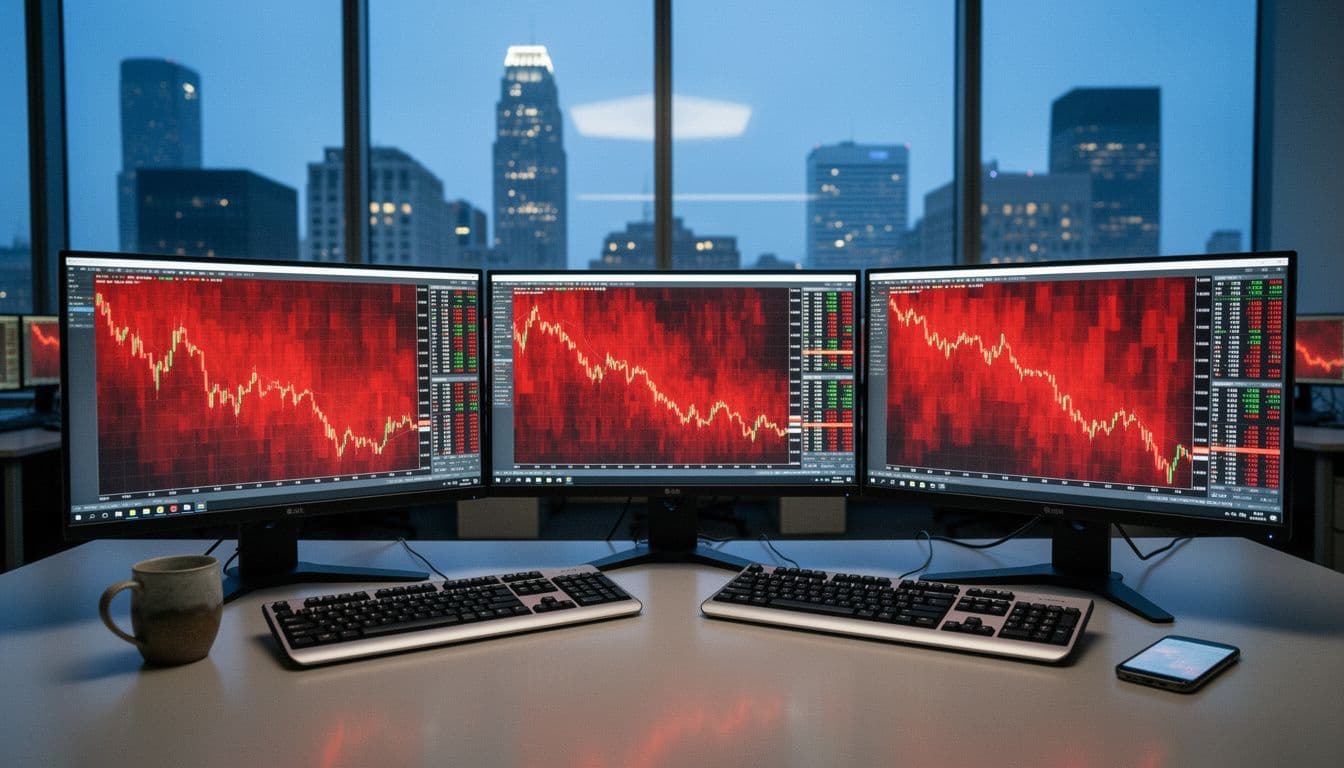
NEW YORK, Jan. 27 - Nvidia shares fell nearly 17% on Monday, wiping out roughly $590 billion in market value in a single session, as investors reacted to a low-cost artificial intelligence model from the Chinese startup DeepSeek. Bloomberg put the loss at $589 billion. Reuters, using LSEG data, put it at about $593 billion. Either way, it is the largest one-day loss in market value for any company on Wall Street.
NEW YORK, Jan. 27 - Nvidia shares fell nearly 17% on Monday, wiping out roughly $590 billion in market value in a single session, as investors reacted to a low-cost artificial intelligence model from the Chinese startup DeepSeek.
Bloomberg put the loss at $589 billion. Reuters, using LSEG data, put it at about $593 billion. Either way, it is the largest one-day loss in market value for any company on Wall Street. The previous record for Nvidia was about $279 billion, set in a 9% drop in September. The stock closed at $118.42, down $24.20, and is now down 11.8% for the year.
The Nasdaq composite fell 3.1%. The S&P 500 dropped 1.5%, while the Dow Jones industrial average rose 0.7%. The Philadelphia semiconductor index fell 9.2%, its worst day since March 2020. Broadcom lost 17.4% and Oracle fell 13.8%. Microsoft slipped 2.1%.
DeepSeek's free assistant, built on its R1 model, passed ChatGPT in downloads on Apple's App Store on Monday. The company says the model competes with leading U.S. systems at a fraction of the cost. Its earlier V3 model, released Jan. 10, was reportedly trained on Nvidia's lower-capability H800 chips for less than $6 million. DeepSeek's WeChat account says R1 is 20 to 50 times cheaper to use than OpenAI's o1 model, depending on the task.
Venture capitalist Marc Andreessen called R1 AI's "Sputnik moment" in a post on X on Sunday.
Nvidia called DeepSeek's work an "excellent AI advancement" and said inference "requires significant numbers of Nvidia GPUs and high-performance networking."
Why it matters: The AI boom on Wall Street rests on an assumption that better models need ever more chips, and Nvidia sells most of the best ones. If a smaller team can get strong results with less hardware, the case for the huge data center budgets at U.S. tech companies gets harder to make. President Trump announced a $500 billion AI infrastructure plan only last Wednesday, and investors are now asking how much of that spending is needed.
Brian Jacobsen, chief economist at Annex Wealth Management, said, "If DeepSeek proves to be a 'better mousetrap,' it could disrupt the entire AI narrative." Others see less risk. Daniel Morgan of Synovus Trust said Nvidia and other chipmakers "remain crucial for the data centre market."
Traders will see on Tuesday whether the selling carries over.
Sources
- 01DeepSeek sparks AI stock selloff; Nvidia posts record market cap loss, Reuters via Kathmandu Postkathmandupost.com
- 02Nvidia's $589 Billion DeepSeek Rout Is Largest in Market History, Bloomberg via Tiger Brokersitiger.com
- 03How major US stock indexes fared Monday, 1/27/2025, AP via Lincoln Daily Newsarchives.lincolndailynews.com
- 04DeepSeek, Wikipediaen.wikipedia.org
Corrections
No corrections have been made to this article.

About the reporter
Senior Business & Economy Reporter, Trestlewire
I was an equity research analyst for five years and have been a financial reporter since 2000. I covered the end of the dot-com bubble from a markets desk, spent the autumn of 2008 reading bank filings at two in the morning in Chicago, and have written about every Federal Reserve rate cycle since. The lesson from all of it is short: the number comes first, and the story is the explanation for the number.
Read full bio and all stories →The Morning Wire
The day’s reporting, in your inbox before nine.
Free. Unsubscribe any time. We never share your address.