Supreme Court Rules Same-Sex Couples Have a Constitutional Right to Marry
WASHINGTON, June 26 - The Supreme Court ruled Friday that the Constitution guarantees same-sex couples the right to marry in all 50 states, a decision that ends a decades long legal fight and requires every state to license and recognize those marriages.

By Jonah Reyes, Politics & Policy
· 2 min read
What to know
- •In dissent, Roberts wrote that the question should have been left to voters and legislatures, and that the majority's decision was an act of will rather than legal judgment.
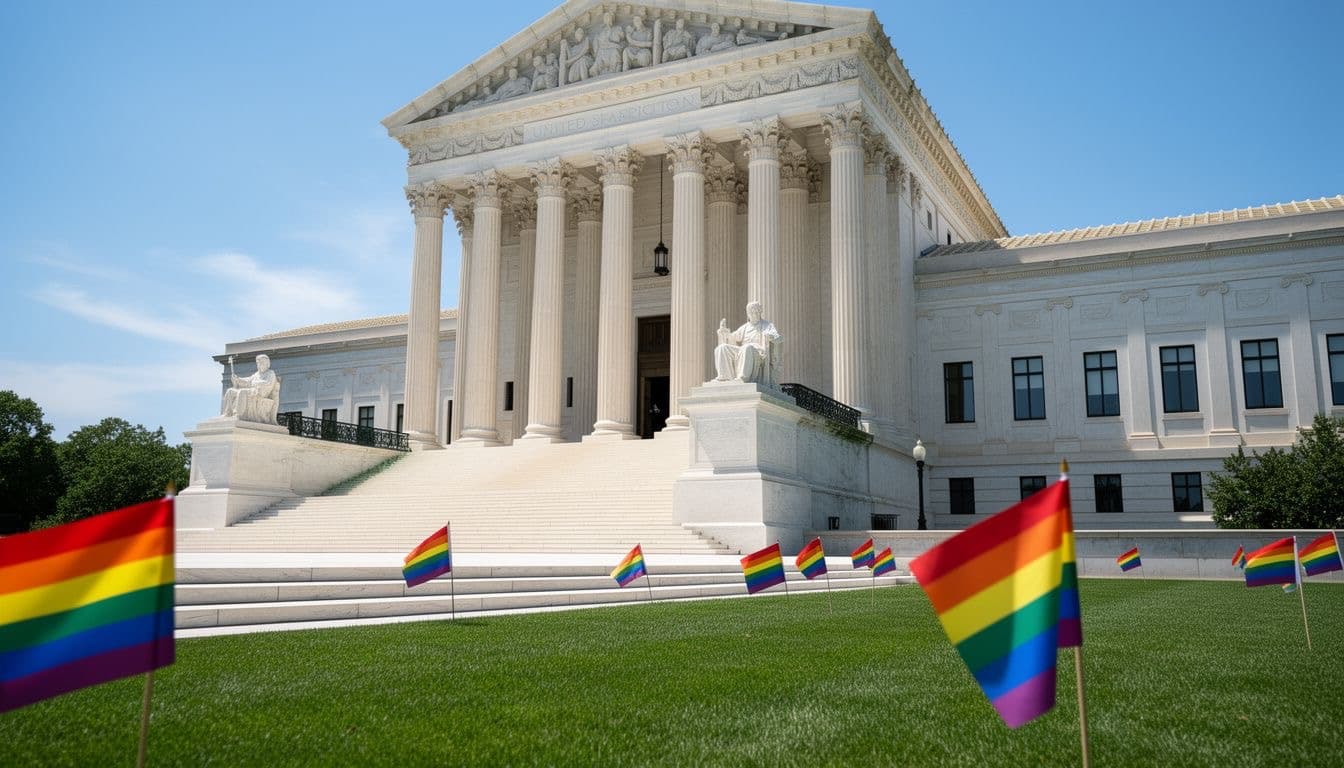
- •Crowds gathered outside the court on Friday morning, with many waving rainbow flags and cheering as word of the decision spread.
- •President Obama, speaking in the Rose Garden, called the ruling "a victory for America." Several Republican presidential candidates criticized the decision, while others said the matter was now settled law and the country must move on.
The short answer
WASHINGTON, June 26 - The Supreme Court ruled Friday that the Constitution guarantees same-sex couples the right to marry in all 50 states, a decision that ends a decades long legal fight and requires every state to license and recognize those marriages. The vote was 5 to 4. Justice Anthony Kennedy wrote the majority opinion, joined by Justices Ruth Bader Ginsburg, Stephen Breyer, Sonia Sotomayor and Elena Kagan.
WASHINGTON, June 26 - The Supreme Court ruled Friday that the Constitution guarantees same-sex couples the right to marry in all 50 states, a decision that ends a decades long legal fight and requires every state to license and recognize those marriages.
The vote was 5 to 4. Justice Anthony Kennedy wrote the majority opinion, joined by Justices Ruth Bader Ginsburg, Stephen Breyer, Sonia Sotomayor and Elena Kagan. Chief Justice John Roberts and Justices Antonin Scalia, Clarence Thomas and Samuel Alito each wrote separate dissents.
"No union is more profound than marriage," Kennedy wrote, "for it embodies the highest ideals of love, fidelity, devotion, sacrifice, and family." He wrote that the couples in the case "ask for equal dignity in the eyes of the law" and that the Constitution grants them that right.
The case, Obergefell v. Hodges, combined challenges from Ohio, Kentucky, Michigan and Tennessee, where state laws banned same-sex marriage. Before Friday's ruling, same-sex couples could marry in 36 states and the District of Columbia. The rest still had bans in place.
In dissent, Roberts wrote that the question should have been left to voters and legislatures, and that the majority's decision was an act of will rather than legal judgment. "Just who do we think we are?" he asked in his opinion. Scalia said the ruling was a "threat to American democracy."
Crowds gathered outside the court on Friday morning, with many waving rainbow flags and cheering as word of the decision spread. Within hours, some county clerks in states that had banned same-sex marriage said they would begin issuing licenses right away. Others said they would wait for official guidance from their state.
President Obama, speaking in the Rose Garden, called the ruling "a victory for America." Several Republican presidential candidates criticized the decision, while others said the matter was now settled law and the country must move on.
Religious groups responded in different ways. Some welcomed the ruling. Others, including the U.S. Conference of Catholic Bishops, said they were disappointed and would continue to defend their view of marriage.
Sources
- 01Obergefell v. Hodges, Wikipediaen.wikipedia.org
- 02Obergefell v. Hodges opinion text, Cornell Legal Information Institutelaw.cornell.edu
Corrections
No corrections have been made to this article.

About the reporter
Politics & Policy Reporter, Trestlewire
The most consequential thing I ever watched a legislature do happened in a committee room in Santa Fe at a quarter past eleven at night, in 2003, with four reporters present and three of them asleep. A single amendment changed who qualified for a state program, and almost nobody noticed for a year. I have been reading bills line by line ever since, because that is where the story usually is.
Read full bio and all stories →The Morning Wire
The day’s reporting, in your inbox before nine.
Free. Unsubscribe any time. We never share your address.