Hundreds pushed the Bean and dozens pushed the Arch. Nobody expected either to move
Chicago's seven-inch push on Cloud Gate drew up to 250 people on the strength of a man who does not exist. St. Louis answered with a prayer, a countdown and a tape measure.
By Nadia Haddad, Media, Retail & Culture
· 4 min read
At a glance
- •Chicago's November 8 push on the 110-ton Bean drew up to 250 people, by one participant's estimate, and the sculpture did not move.
- •St. Louis tried the Arch a week later on November 15, with dozens of people, a prayer and a tape measure, against a monument of more than 17,000 tons.
- •Storm Area 51 drew millions of RSVPs and about 75 attendees. These pushes drew small but real crowds, plausibly because the ask was local and impossible to lose.
Zane Stobie, of south St. Louis County, ran laps around the base of the Gateway Arch on November 15 with a tape measure held over his head. Behind him, a few dozen people who had just braced their shoulders against the Arch's glistening metal under a countdown cheered as he declared the monument moved. It had not moved. Stobie knew that, and so did everyone cheering.
The attempt was a joke event, staged a week after hundreds of Chicagoans tried to push Cloud Gate, the sculpture everyone calls the Bean, seven inches to the left. St. Louis picked the same distance, the same direction, and a slightly earlier start: 12:07 p.m. against Chicago's 12:47. The Bean weighs 110 tons, according to the City of Chicago. NPR Illinois reports the Arch at more than 17,000 tons, which by my arithmetic is about 155 times heavier.
A man, a pickle, and a door
The Chicago version began with a flyer. An anonymous organizer put up a Partiful invitation that opened, "There is a man trapped inside the bean." The page said new research suggested a latch door under the sculpture's right side, and that a seven-inch shove might let the crowd "give the man inside The Bean a pickle and other resources," The Mary Sue reported. There is no man. The downtown alderman said so, and his office fielded a flood of calls about it anyway.
A student who joined the push told The Mary Sue she saw the flyer on Instagram the night before and figured it would make a decent Sunday outing. She put the crowd at up to 250 people, a figure Dexerto repeats and that traces back to one participant's account. The Bean did not budge. A local promoter filmed himself in the crowd and called it "at least one inch," then added a caption admitting the sculpture had not actually moved.
"In the back of everyone's minds, we knew it wasn't really gonna move," the student said. Her reason for going was plainer. "It gave me something to do today."
St. Louis answers back
The St. Louis response started with Megan Estopare, who runs an account called STL Ain't Bad and posted a riff on the Chicago flyer: "I just feel like we're stronger than Chicago." The post drew more than 21,000 reactions on Instagram in a week, NPR Illinois reported. By Sunday, Yovani Carrillo of Benton Park was opening the gathering with a nondenominational prayer for strength, then leading the countdown.
Kyle Mrotek, of Affton, had a motive that predates the internet. "Chicago couldn't do it," he said. "We got to show them up." The rivalry between the two cities goes back at least to 1870, when an inflated census count helped St. Louis claim it was bigger than Chicago. Meghan McCabe, of Soulard, pitched her goals more modestly: "We're here to unite for the memes." She hoped to shift the Arch "a little bit more south," a request the National Park Service had already answered in advance. By the agency's account, the Arch's foundations run 60 feet underground, 30 of them into bedrock.
A goal that cannot fail
Online calls to gather usually collapse at the door. The Mary Sue points to the Storm Area 51 event in Nevada, where more than two million people said on Facebook they would attend and about 75 had shown up by that Friday morning. Dexerto notes that a 2017 plan to Windex the Bean drew more than 2,000 people who said they would help, and never happened.
Seven-inch pushes did better, and the numbers are still small: up to 250 in Chicago, dozens in St. Louis. No official count appears in the coverage, and nobody surveyed either crowd, so who these people were and how far they traveled is unknown. A reasonable reading, and it is only a reading, is that the ask was built to be met. It cost a Sunday around noon and no one's dignity, because nobody could lose. The sculpture was never going to move, so nobody could fail to move it.
The Mary Sue lists a similar pattern of small, silly turnouts that did arrive, including a Gojo lookalike contest in New York that drew more than 400 spectators and 25 cosplayers to Washington Square Park. The common feature is a goal that is absurd and a time that is exact. Rosalyn Jourdan, who recently moved to the Carondelet neighborhood from Joplin, said the effort was a way to meet new friends, and of her new neighbors, "they're interested in getting together, even if it's for an absurd reason."
The Chicago stunt had a cost the St. Louis one did not. The alderman's office had to field calls about a man who does not exist. The Arch sits inside a National Park Service site, where rangers looked on, NPR Illinois said, puzzled.
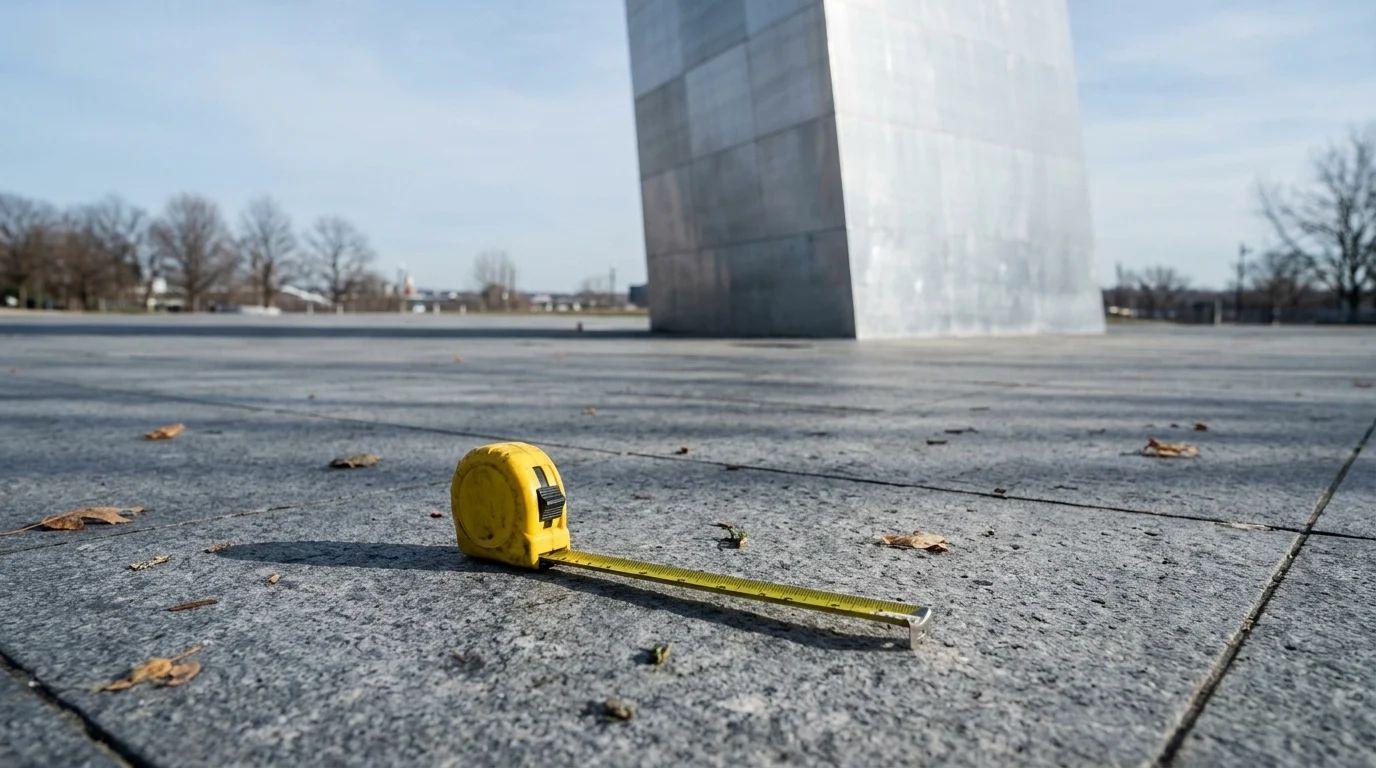
Stobie, for his part, defended the exercise without pretending it worked. Events like this, he said, show "a sense of just being whimsical, having a good time, a sense of community." NPR Illinois's photos show where the tape measure ended up: resting on the ground at the foot of the Arch, measuring nothing.
Sources
- 01St. Louis tries in vain to move the Arch with hopes of 'one-upping Chicago', NPR Illinoisnprillinois.org
- 02Hundreds of people gather in Chicago to push The Bean, then they explain the bizarre reason for the campaign, The Mary Suethemarysue.com
- 03Viral campaign urged people to push Chicago's Bean to help man trapped inside, Dexertodexerto.com
Corrections
No corrections have been made to this article.
About the reporter
Features Writer, Trestlewire
I am a features writer, which mostly means I hang around. I have spent the better part of my career, since 2001, in the back rooms of department stores, at studio lots and record labels, at shopping-mall food courts and at trade shows in Las Vegas, watching how things get sold and why people buy them.
Read full bio and all stories →The Morning Wire
The day’s reporting, in your inbox before nine.
Free. Unsubscribe any time. We never share your address.