Alibaba Open-Sources an AI That Beat 23 of 26 Radiologists at Reading CT Scans
DAMO RADAR flags nearly 150 conditions, including several cancers, in a single abdominal CT scan. Alibaba published the code and model weights on September 18, 2026, with a license that blocks anyone from selling access to it.

By Mara Voss, Technology
· 3 min read · Updated
Key Takeaways
- •Alibaba's Damo Academy open-sourced DAMO RADAR's code, training framework and model weights on September 18, 2026, one day after its results were published in the journal Science.
- •In a reader study, RADAR outperformed 23 of 26 specialist radiologists at flagging findings across 146 conditions in abdominal CT scans, covering 18 organs including several cancers.
- •Radiologists using RADAR as an assistant raised their detection sensitivity by about 10 percentage points and cut reading time by more than 30 percent, per the Science paper.
- •The model was trained on more than 420,000 CT examinations and 15 million image-report pairs without manual annotation, according to the project's GitHub documentation.
- •The code is released under a permissive Apache 2.0 license, but the trained model weights carry a CC BY-NC-SA 4.0 license that blocks commercial use without a separate agreement with Alibaba.
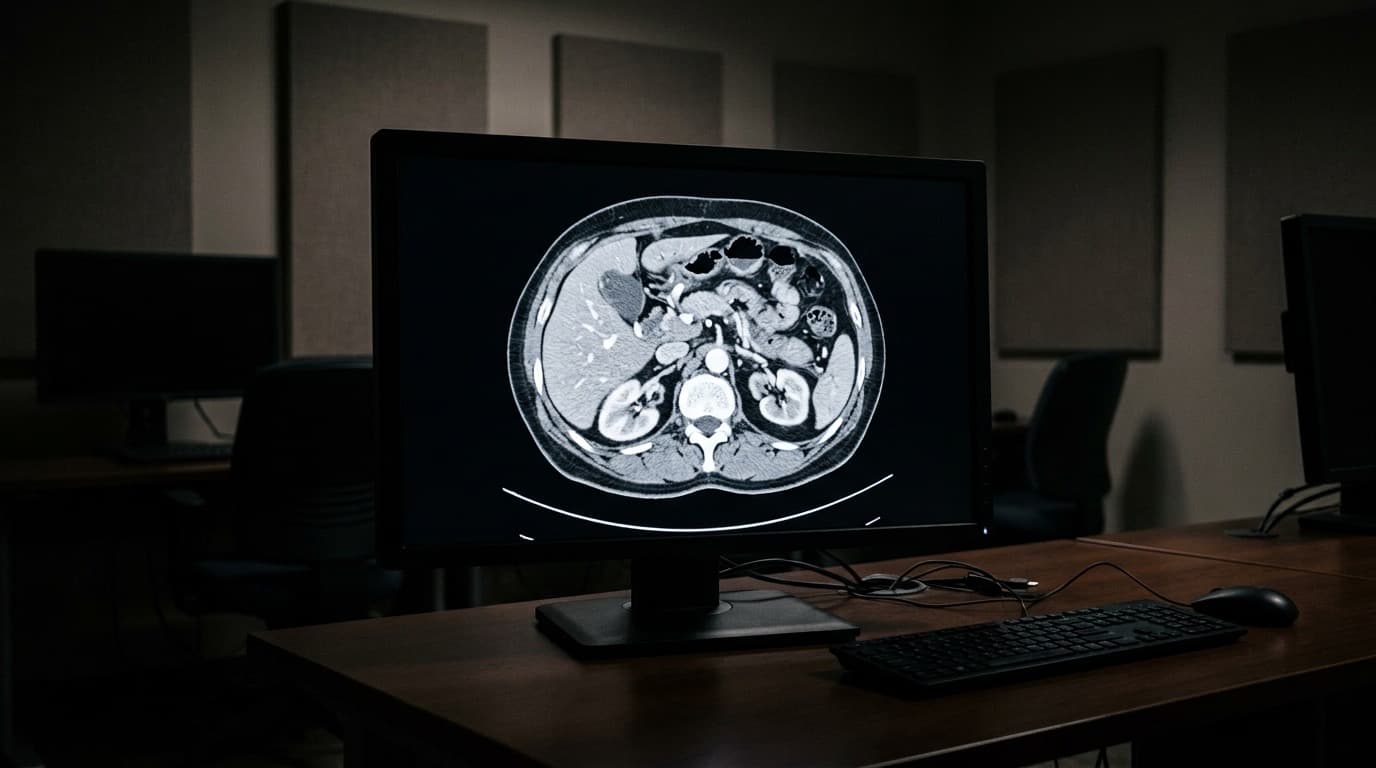
Alibaba's research division published the full code, training framework and model weights for an AI system that reads abdominal CT scans on September 18, 2026. The release came one day after its results appeared in the journal Science. The system, called DAMO RADAR, outperformed 23 of 26 radiologists in a head-to-head reading test. The free part stops at commercial use.
The short answer
DAMO RADAR is a vision-language model from Alibaba's Damo Academy that screens contrast-enhanced abdominal CT scans for 146 findings across 18 organs, including liver, pancreatic and colorectal cancers. In a Science-published reader study, it beat 23 of 26 specialist radiologists, and using it as an assistant raised radiologists' detection sensitivity by about 10 percentage points while cutting reading time more than 30 percent. The code is open under Apache 2.0. The trained weights carry a non-commercial license.
23 of 26
radiologists RADAR outperformed in a head-to-head reader study
Detection sensitivity rose about 10 percentage points and reading time fell more than 30 percent when radiologists used RADAR as an assistant, according to the Science paper.
How Alibaba trained it
DAMO RADAR learned from more than 420,000 contrast-enhanced CT examinations paired with 15 million anatomy-aware image-report pairs, according to Tech Times. The project's own GitHub documentation says the model was built by "learning directly from clinical reports without manual annotation," and claims "expert-level performance across both routine and complex clinical tasks."
“is not inherently limited to the abdomen or to CT”
What's actually free
Open source, on this release, means two different things. The inference and training code sits on GitHub under an Apache 2.0 license, permissive terms that let anyone inspect, modify or build on it without asking. The trained model weights, the actual learned parameters behind the 15 million image-report pairs, are released separately on Hugging Face under a CC BY-NC-SA 4.0 license.
That second license permits research use and blocks anyone from selling access to the model, or building a paid product on top of it, without a separate agreement with Alibaba.
What the study does not show yet
The Science paper validated RADAR against roughly 40,000 real-world exams across eight independent clinical centers, a wide external test most published radiology AI models never get. It is still a reader study: radiologists interpreting scans with and without the model's suggestions, not a trial tracking whether patients who got a RADAR-assisted read had better outcomes than those who didn't.
Neither the Science paper's coverage nor Alibaba's own repository documentation mentions a regulatory clearance in any market, and the release includes no prospective data on patient outcomes. A reader study measures how well radiologists read scans with an assistant. It does not by itself show the assistant makes patients healthier, and Alibaba has not published research claiming otherwise.
Part of a pattern, not a one-off
This is not Damo Academy's first disease-screening AI. Alibaba's research arm, founded in 2017, has built a track record of CT-reading models aimed at cancers that are hard to catch early, and RADAR is the broadest release yet, covering nearly 150 findings instead of one disease, according to South China Morning Post reporting on the group's expanding medical AI work.
For a hospital or a university lab, RADAR is now free to download, inspect and retrain starting today. For a company that wants to build a commercial diagnostic product on top of it, the Science paper and the open code are a research foundation, not a finished tool, and Alibaba's own license makes clear that turning it into a paid product requires a separate conversation with Damo Academy first.
- Alibaba
- DAMO Academy
- medical AI
- open source
- cancer detection
- radiology
Sources
- 01Alibaba Radiology AI Outperforms 23 of 26 Radiologists Across 146 Diseases in Science, Tech Timestechtimes.com
- 02Alibaba open-sources medical AI model that can detect cancer and nearly 150 conditions, South China Morning Postscmp.com
- 03DAMO RADAR repository documentation, GitHub (alibaba-damo-academy)github.com
Corrections
No corrections have been made to this article.

About the reporter
Technology Reporter, Trestlewire
I spent seven years as a product manager at a mid-size SaaS company before I ever wrote a sentence for pay, which means I have sat through more roadmap reviews than most people would tolerate in a lifetime. I watched a scheduling feature get rebranded three times before it shipped, and I watched a launch date slide past four straight quarters while the slide deck stayed exactly the same. That is where the question I still ask every day came from: does this actually ship, or is it a demo.
Read full bio and all stories →