Gen Z Trusts TikTok Doctors More Than Their Own. A New Study Says It's the Lab Coat.
A VCU researcher interviewed 26 Gen Z TikTok users who follow doctor-influencers and found most never checked whether those doctors are licensed. They rated the strangers online as more accessible, more credible, and more caring than the physicians who have actually treated them.

By Sana Whitfield, Culture, Science & Life
· 3 min read · Updated
Key Takeaways
- •A Virginia Commonwealth University study published in the Journal of Consumer Affairs in September 2026 found Gen Z TikTok users rate physician-influencers as more credible than their own doctors.
- •Researchers Suzanne Makarem, Brittany Beck, and Jie Fowler analyzed 330 videos from 11 licensed doctors with over 100,000 TikTok followers each and interviewed 26 Gen Z participants ages 14 to 27.
- •Interview participants said they trusted TikTok doctors' advice without ever verifying the influencers' medical licenses.
- •Physician-influencers who wore medical attire or filmed in clinical settings drew more engagement than those filmed in casual clothing or at home, the study found.
- •Only about 17 percent of health and wellness influencers are credentialed medical professionals, according to Pew Research Center data cited in the study.
One participant in a new study put the split bluntly. Her gynecologist had explained how to treat a urinary tract infection. The person who actually taught her how to get through the pain was a doctor she had never met, filmed in what looked like a home office, on TikTok.
That gap, between the doctor who diagnosed her and the doctor she trusted, is the subject of a study out of Virginia Commonwealth University's School of Business, published in the Journal of Consumer Affairs this September. Marketing professor Suzanne Makarem and co-authors Brittany Beck and Jie Fowler analyzed 330 TikTok videos from 11 licensed physicians, each with more than 100,000 followers, then interviewed 26 Gen Z users, ages 14 to 27, who actively follow doctor-influencers. Their finding: these viewers rated strangers on TikTok as more accessible, more credible, and more altruistic than their own physicians, often without checking whether the person on screen was licensed to practice anything at all.
The short answer
A Virginia Commonwealth University study interviewed 26 Gen Z TikTok users who follow physician-influencers and found they trust those strangers more than their own doctors, rating them as more accessible, credible, and caring. Few had verified the influencers' actual medical licenses. Researchers call it the mere social media presence effect: a white coat and a clinical backdrop on a phone screen can outweigh an in-person relationship with a real physician, at least in how trustworthy that physician feels.
17%
share of health and wellness influencers who hold a real medical credential
The rest, per Pew Research Center data cited in the study, have no verified license, degree, or clinical training behind the advice they post.
Why a stethoscope on camera works
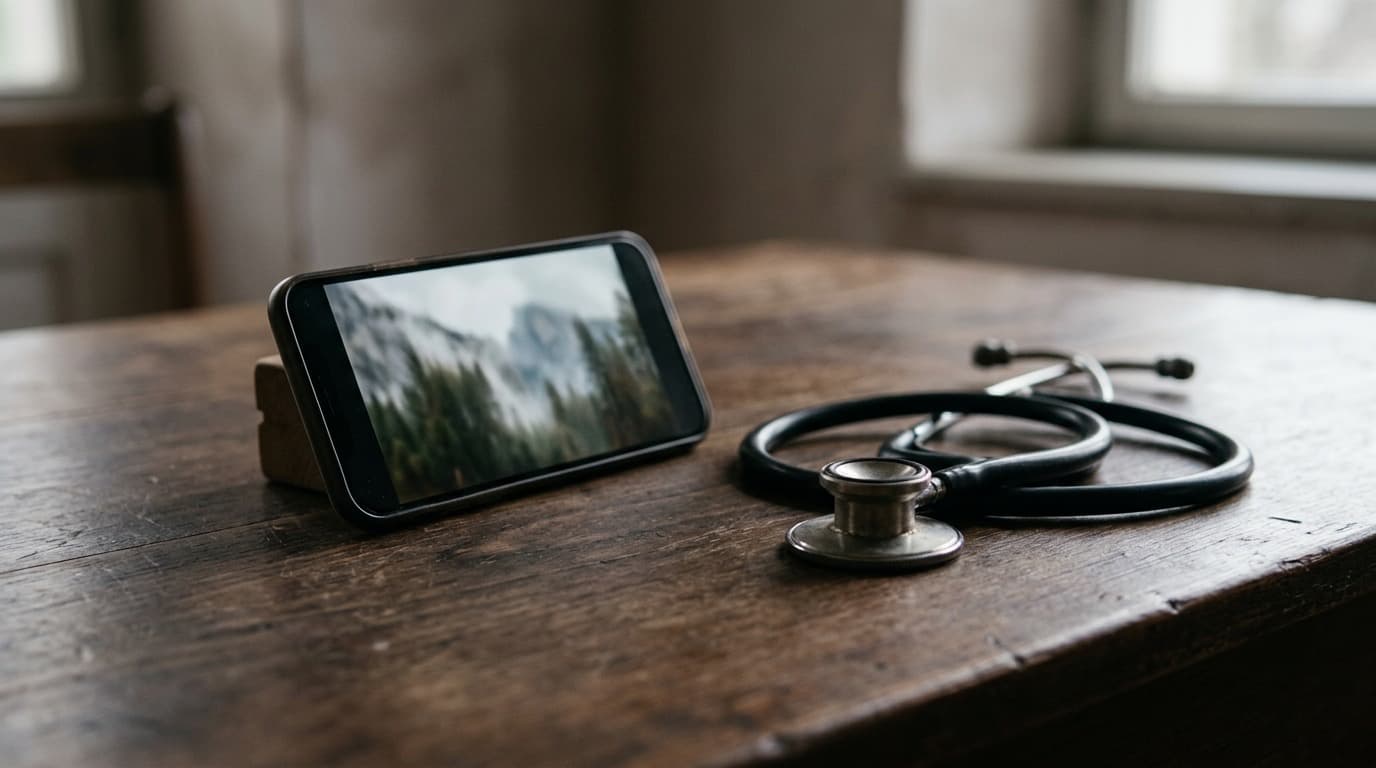
Makarem's term for the mechanism is the mere social media presence effect. Normally, viewers apply what researchers call persuasion knowledge, the mental flag that goes up when someone online is clearly trying to sell something. A licensed doctor filming from what looks like a clinic appears to disarm that flag almost entirely.
“What a physician-influencer recommends may carry more weight than what their own doctor tells them. That should give us pause.”
The white coat outperforms the hoodie
The study also tracked which videos drew more engagement. Physicians who wore medical attire or filmed in exam rooms and clinical-looking spaces pulled significantly more views and comments than the same doctors filming in casual clothing at home. The credibility signal turns out to be visual before it is ever verified.
Why their own doctors lost the comparison
The interviews point to a specific grievance, not a vague distrust of medicine. One participant told researchers her physician "isn't interested in preventative medicine. He wants me to keep coming to see him because that's how he makes money." Another participant's comparison was more direct: the TikTok doctors kept showing up, answering questions in the comments, acting invested, in a way a ten-minute office visit rarely allows.
Other participants raised a more basic problem: booking a real appointment, especially for mental health care, can take weeks. A doctor already on their phone, posting daily, filled that gap before any question of credentials came up.
What the study cannot tell us
The sample is small and self-selected. Twenty-six interview subjects, all of whom already followed physician-influencers going in, are not a representative slice of Gen Z, and the study cannot say how often the medical advice in those 330 videos was accurate or dangerous. What it measures is trust, not correctness, and those are not the same thing. The paper, published under a Creative Commons license through Wiley, states that limitation itself rather than claiming the trust gap proves TikTok doctors know more than the ones with offices.
The practical test for anyone scrolling past a doctor in scrubs is not whether the account feels caring. It is whether anyone has checked the license. Makarem's research suggests that step, the one persuasion knowledge is supposed to force, is exactly the one a white coat on a small screen talks people out of.
- TikTok
- Gen Z
- physician-influencers
- health misinformation
- Virginia Commonwealth University
- social media trust
Sources
- 01Popular TikTok docs have big influence on Gen Z followers, new VCU research finds, VCU Newsnews.vcu.edu
- 02True Believers: Gen Z followers and #TikTok docs, VCU School of Businessbusiness.vcu.edu
- 03When Doctors Become Influencers: How Social Media Presence Disarms Persuasion Knowledge and Shapes Consumer Behaviors, Journal of Consumer Affairs (Wiley)doi.org
- 04Some TikTok users trust medical influencers more than their own doctors, Tubefiltertubefilter.com
Corrections
No corrections have been made to this article.

About the reporter
Culture, Science & Life Reporter, Trestlewire
I started out writing about science — real lab-coat, peer-reviewed, methods-section science — and I moved into culture coverage because I kept noticing that the internet, not the lab, is often where science actually plays out in people's daily lives now. A study on sleep or attention or habit formation used to sit in a journal for a decade before anyone outside the field read it. Now it shows up in a group chat by Thursday, usually stripped of every caveat that made it interesting in the first place.
Read full bio and all stories →