A New Jersey Teen Swallowed Benadryl to Hallucinate. Poison Center Calls From Teens Have Doubled This Year.
A Rutgers doctor treated the case herself. A 2026 study built on 2020 data shows online dares for the Benadryl Challenge still predict real overdose spikes about ten days later.

By Sana Whitfield, Culture, Science & Life
· 4 min read · Updated
Key Takeaways
- •Poison center calls involving diphenhydramine among teens ages 13 to 19 hit 6,179 in the first five months of 2026, more than double the same period in 2025, according to America's Poison Centers.
- •Diane Calello, medical director of the New Jersey Poison Control Center at Rutgers New Jersey Medical School, said her team managed a case this fall in which a teenager took a large dose of Benadryl to hallucinate and was hospitalized with confusion and slurred speech.
- •A 2026 study in Pharmacoepidemiology and Drug Safety found that spikes in online Benadryl Challenge mentions preceded jumps in poison center calls by about ten days, using data from 2020, the first documented wave of the trend.
- •The share of teen diphenhydramine cases linked to intentional misuse rose to 13.2 percent in 2026, up from 7.3 percent in 2020.
- •Three children in Connecticut died from apparent diphenhydramine overdoses this year, though state officials have not confirmed a link to the social media trend.
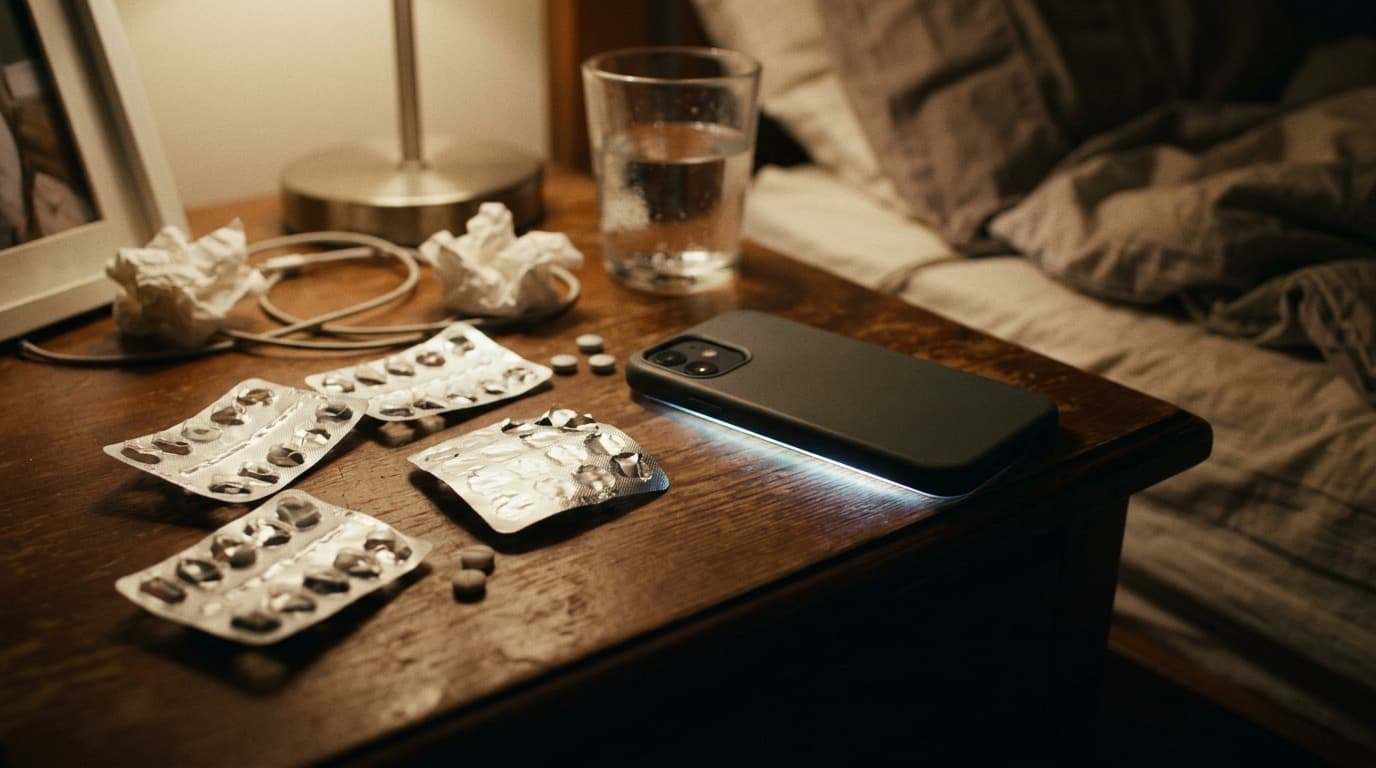
A New Jersey teenager swallowed a large dose of Benadryl this fall, chasing the hallucinations a social media trend promised. Within hours the teen was confused, disoriented, and slurring words badly enough that a parent called poison control. What started as a dare ended in a hospital bed.
The stunt has a name on TikTok: Benny tripping, sometimes called the Benadryl Challenge. Teens take several times the recommended dose of diphenhydramine, the sedating antihistamine in Benadryl, to trigger hallucinations instead of drowsiness. Diane Calello, executive and medical director of the New Jersey Poison Control Center at Rutgers New Jersey Medical School, said her team handled this specific case. "What may look harmless on a screen can become a medical emergency in real life," she said.
The short answer
This is not an isolated case. Poison center calls involving diphenhydramine among teens have more than doubled in 2026 compared with the same months last year, part of a resurgence of a trend first documented in 2020. A peer-reviewed study found online chatter about the challenge reliably predicts spikes in real overdose calls about ten days later.
The numbers behind the comeback
America's Poison Centers, the trade group for the country's regional poison hotlines, counted 10,068 calls involving diphenhydramine among 13 to 19 year olds in 2024. That climbed to 13,284 in 2025, a 32 percent jump. In just the first five months of 2026, call volume hit 6,179, more than double the same stretch of 2025.
6,179
poison center calls involving diphenhydramine among US teens, Jan-May 2026
More than double the same five months in 2025, per America's Poison Centers.
Three children in Connecticut died from apparent diphenhydramine overdoses over a two-month stretch this year. State officials have not confirmed whether the deaths are connected to the online challenge, and Kenvue, the company that makes Benadryl, has pointed to that same uncertainty in its own public statements. What is not in dispute is the direction of the raw numbers.
Researchers mapped this pattern before it had this year's numbers attached to it
In August 2026, researchers at Rocky Mountain Poison and Drug Safety in Denver and Kaiser Permanente San Francisco published a retrospective analysis in the journal Pharmacoepidemiology and Drug Safety. The team, led by Jacob Altholz, compared online mentions of "benadryl challenge" and "benadryl trip" against the National Poison Data System's count of diphenhydramine cases. The underlying data was not new: it ran from July through December of 2020, the first documented wave of the trend.
The pattern held anyway. Spikes in online mentions were followed by a significant rise in adolescent poison center calls, with the strongest statistical link appearing about ten days after mentions peaked. Call volume stayed elevated for more than 25 days after that.
“Many families have Benadryl and other over-the-counter medicines at home and would never expect it to send a child to the hospital.”
The correlation the researchers found was real but modest on its own, a statistical relationship of 0.26 at its peak, the kind of signal useful for an early warning system rather than proof that one post causes one overdose. Still, six years and one pandemic later, the same mechanism that 2020 data described, teenagers seeing a dare online and poison centers getting calls about ten days after, is the same mechanism showing up again in 2026's numbers.
Why this one keeps fooling parents
Diphenhydramine is sold without a prescription and sits in most medicine cabinets for allergies and sleep. That is exactly why it works as a dare: nobody has to buy anything suspicious, ask an older sibling, or find a dealer. America's Poison Centers data shows the share of teen diphenhydramine cases tied to intentional misuse, as opposed to accidental exposure, rose to 13.2 percent in 2026, up from 7.3 percent in 2020.
The drug did not get more dangerous. More teens are taking it on purpose.
Public health reporting about viral self-harm trends carries its own paradox: naming the stunt is also how more people learn it exists. Calello's warning is aimed at parents, not at the platforms where the dare circulates, and it does not try to resolve that tension so much as work around it, by making sure the adults who stock the medicine cabinet know what they are looking at before the next call comes in.
- Benadryl Challenge
- diphenhydramine
- poison control
- teen health trends
- viral trends
Sources
- 01How a Viral Trend Sent a New Jersey Teenager to the Hospital, Rutgers University / Newswisenewswise.com
- 02Web Monitoring as an Early Warning System: "Benadryl Challenge" Online Mentions Correlate With Diphenhydramine Overdoses Reported to US Poison Centers, Pharmacoepidemiology and Drug Safety (PMC)pmc.ncbi.nlm.nih.gov
- 03Amid social media challenge, calls to poison centers for Benadryl among teens more than double this year than last, ABC Newsabcnews.com
Corrections
No corrections have been made to this article.

About the reporter
Culture, Science & Life Reporter, Trestlewire
I started out writing about science — real lab-coat, peer-reviewed, methods-section science — and I moved into culture coverage because I kept noticing that the internet, not the lab, is often where science actually plays out in people's daily lives now. A study on sleep or attention or habit formation used to sit in a journal for a decade before anyone outside the field read it. Now it shows up in a group chat by Thursday, usually stripped of every caveat that made it interesting in the first place.
Read full bio and all stories →