TikTok's Castor Oil Trend Has One Study Behind It. It Ran On 35 People.
A British singer's castor oil video has pulled 4.9 million views this year. The only clinical trial behind the trend followed 35 elderly patients in two Turkish rest homes and never measured detox, bloating, or weight loss.

By Sana Whitfield, Culture, Science & Life
· 3 min read · Updated
Key Takeaways
- •The only clinical trial on castor oil packs followed 35 elderly residents at two rest homes in Manisa, Turkey, published in 2011 in Complementary Therapies in Clinical Practice.
- •The trial found castor oil packs reduced straining and improved stool-consistency scores but did not change how often or how much participants had bowel movements.
- •A TikTok video from British singer libertyava, tagged witchtok, has drawn 4.9 million views and 656,700 likes for a castor oil ritual, pulling the trend outside wellness accounts.
- •Dermatologist Dr. Viktoryia Kazlouskaya and physician assistant Marlee Bruno say skin cannot absorb enough castor oil to reach the digestive system, and the belly button has no direct connection to internal organs.
- •The FDA's only approved use for castor oil is as an oral stimulant laxative. Every topical use circulating on TikTok, including detox and bloating claims, remains unstudied at that scale.
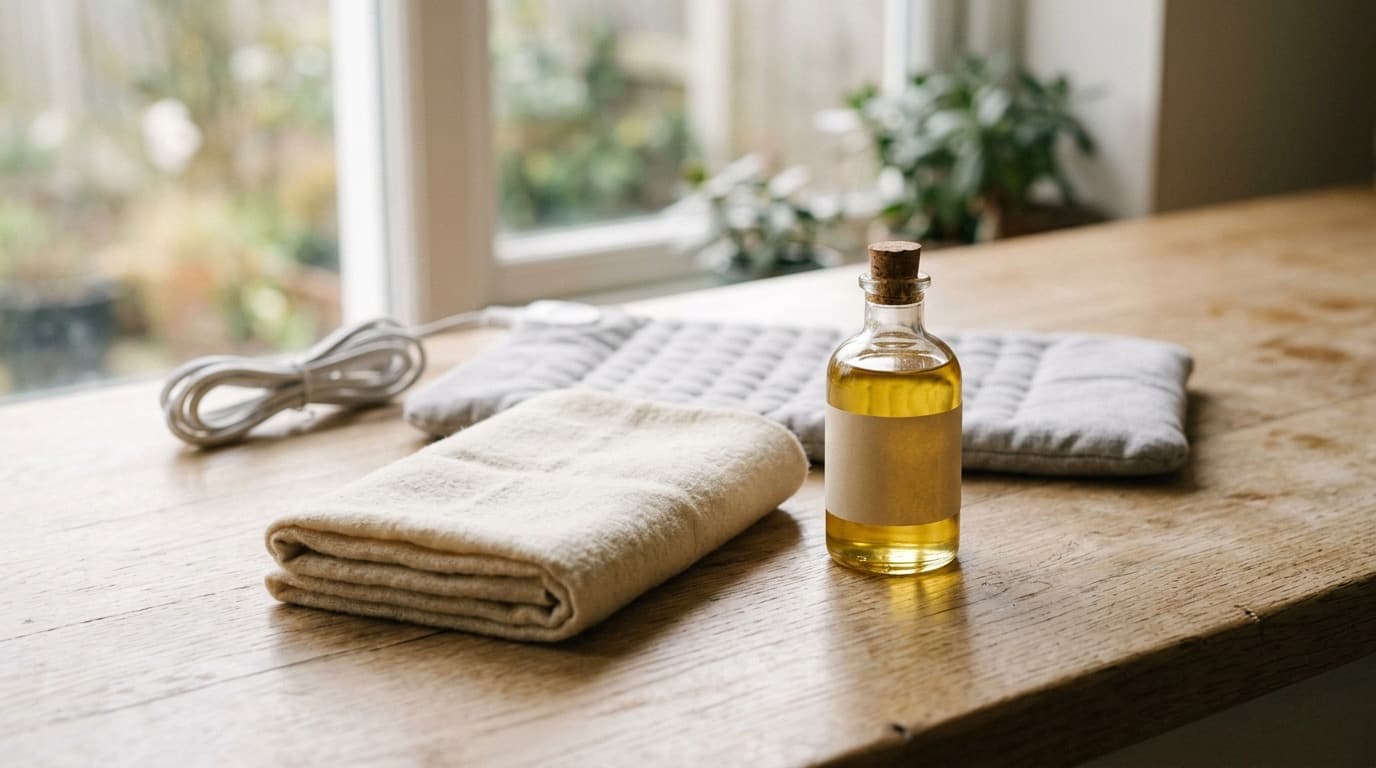
Hannah Pointer's nightly routine video shows her soaking a strip of unbleached wool flannel in castor oil, laying it across her stomach, and topping it with a heating pad. The caption promises it will not stain clothes or sheets. Underneath is a link to her Amazon storefront, filed under 'nighttime routine.' The video has pulled 550,000 plays and 18,300 likes since she posted it.
Pointer, who runs the nutrition brand MacroHabits, is one node in a trend that has moved well past wellness accounts. A British singer who posts under the handle libertyava tagged her own castor oil video 'witchtok' and 'CRAZY.' It has been watched 4.9 million times and liked 656,700 times, numbers that dwarf most of her music content. Castor oil, a plant extract used as a home remedy for generations, is having a second life as a TikTok ritual for bloating, cramps, and vague claims of 'detox.'
The short answer
Castor oil packs probably help with menstrual cramps and general stomach tension because of heat and gentle pressure, not because the oil soaks through skin into the gut. The one clinical trial on the packs followed 35 people, was published in 2011, and measured straining during bowel movements, not detox, weight loss, or the other claims circulating on TikTok. Nothing in that trial or in dermatologists' explanations supports rubbing oil on the belly button to reach internal organs.
The only real trial ran on 35 people in Turkey
The trial, published in Complementary Therapies in Clinical Practice in 2011, followed 35 elderly residents at two rest homes in Manisa, Turkey. Eighty percent had been constipated for at least ten years. Researchers Gulsah Gurol Arslan and Ismet Eser applied the packs and tracked bowel movements for a week before, three days during, and four days after. The packs did not change how often participants went or how much they passed. They did lower how hard people strained and improved a stool-consistency score, by the study's own measures.
35
participants in the only clinical trial on castor oil packs
Two rest homes in Manisa, Turkey, 2011. It measured straining, not detox or weight loss.
What the pack's own defenders say it does
Dr. Iris Kerin Orbuch, an endometriosis surgeon in Los Angeles, told E! News the packs work mainly through heat and a compound called ricinoleic acid, an unsaturated fatty acid that makes up close to 90 percent of castor oil. Applied with warmth, she says, it can relax the smooth muscle of the uterus, which may ease cramps, and it may bind to receptors in the intestinal wall that ease bloating and gas. She recommends organic, hexane-free castor oil soaked into wool or cotton flannel, placed over the right side of the abdomen for liver support, with a heating pad on top for 45 to 60 minutes. She lists pregnancy, breastfeeding, and a known allergy to castor oil as the main reasons to skip it.
Where the pack's critics draw the line
“The skin's ability to absorb substances is quite limited, so expecting castor oil to penetrate deeply enough to impact digestion or metabolism isn't realistic.”
Not every doctor agrees the oil itself is doing anything. Physician assistant Marlee Bruno put it more directly: the belly button is not connected to the digestive or detox systems, so oiling it does not reach either one. Northwestern integrative medicine physician Dr. Melinda Ring traces the ritual to Ayurvedic medicine but stops short of endorsing the modern claims built on top of it.
The FDA's only approved use for castor oil is as an oral stimulant laxative, a different product taken a different way. Everything else on TikTok, the belly button ritual, the liver detox claim, the sleep boost, sits in the same spot as ricinoleic acid on skin: plausible in theory, unproven in the one trial anyone has run. That does not make Pointer's routine dangerous. It means the heating pad is probably doing more work than the oil, and the study that would prove otherwise still has not been done.
- castor oil
- TikTok wellness trends
- viral health trends
- alternative medicine
- clinical research
Sources
- 01Are Castor Oil Packs Really Healthy? A Doctor Explains the Viral Trend, E! Newseonline.com
- 02Medical experts weigh in on the castor oil belly button trend, Yahoo Lifeyahoo.com
- 03An examination of the effect of castor oil packs on constipation in the elderly, PubMed / Complementary Therapies in Clinical Practicepubmed.ncbi.nlm.nih.gov
- 04Castor Oil Packs: The Science Behind the TikTok Trend, Rupa Healthrupahealth.com
- 05Castor oil ritual video, TikTok / @libertyavawalkertiktok.com
- 06Nighttime castor oil pack routine, TikTok / @hannah.pointertiktok.com
Corrections
No corrections have been made to this article.

About the reporter
Culture, Science & Life Reporter, Trestlewire
I started out writing about science — real lab-coat, peer-reviewed, methods-section science — and I moved into culture coverage because I kept noticing that the internet, not the lab, is often where science actually plays out in people's daily lives now. A study on sleep or attention or habit formation used to sit in a journal for a decade before anyone outside the field read it. Now it shows up in a group chat by Thursday, usually stripped of every caveat that made it interesting in the first place.
Read full bio and all stories →