California Will Tax Private ICE Detention Companies 25 Percent of Their Income
AB 1633 creates the nation's first tax on private immigration detention operators, four years after a federal appeals court blocked California's attempt to ban them outright. The rate was cut in half during negotiations, from 50 percent to 25.

By Jonah Reyes, Politics & Policy
· 5 min read · Updated
Key Takeaways
- •AB 1633, signed by Governor Newsom on September 29, 2026, taxes private ICE detention operators 25 percent of gross income starting July 1, 2028.
- •The rate was cut in half from the 50 percent version Assemblymember Matt Haney introduced in January 2026, after Senate amendments in June and August.
- •GEO Group and CoreCivic, which together run all seven of California's privately operated ICE facilities, collect well over $500 million combined in annual contract revenue across those sites.
- •The law follows a 2022 Ninth Circuit ruling that struck down California's 2019 outright ban on private detention as a Supremacy Clause violation, which is why lawmakers chose a tax over a ban this time.
- •A separate bill, SB 420, signed October 1, strips one Calexico detention facility's operator of a charity property-tax exemption worth at least $6 million.
A new California law will take 25 percent of gross income from any company running a private immigration detention center in the state, starting July 1, 2028. Governor Gavin Newsom signed AB 1633 on September 29, making California the first state to tax, rather than try to ban, the industry that houses federal immigration detainees for profit. Only two companies currently qualify: GEO Group and CoreCivic.
The short answer
AB 1633 creates a new state tax, the Private Detention Facility Tax, on any for-profit company running an immigration detention center in California. Starting July 1, 2028, operators owe the state 25 percent of their gross income from that work, with the money going into a new Due Process for All Fund for immigration legal services. GEO Group and CoreCivic together run all seven of the state's privately operated ICE facilities.
A rate cut in half along the way
25%
AB 1633's tax on a private detention operator's gross income
Down from the 50 percent rate that passed the Assembly in May 2026.
Assemblymember Matt Haney introduced the bill on January 26, 2026, as a 50 percent tax taking effect in 2027. The number moved twice after that. The Senate amended it on June 16 and again on August 21, cutting the rate to 25 percent and pushing the effective date to mid-2028, before the bill was enrolled the same day and signed six weeks later as Chapter 740 of the 2026 session, according to the bill's history on file with the California Legislature.
Two companies, seven facilities
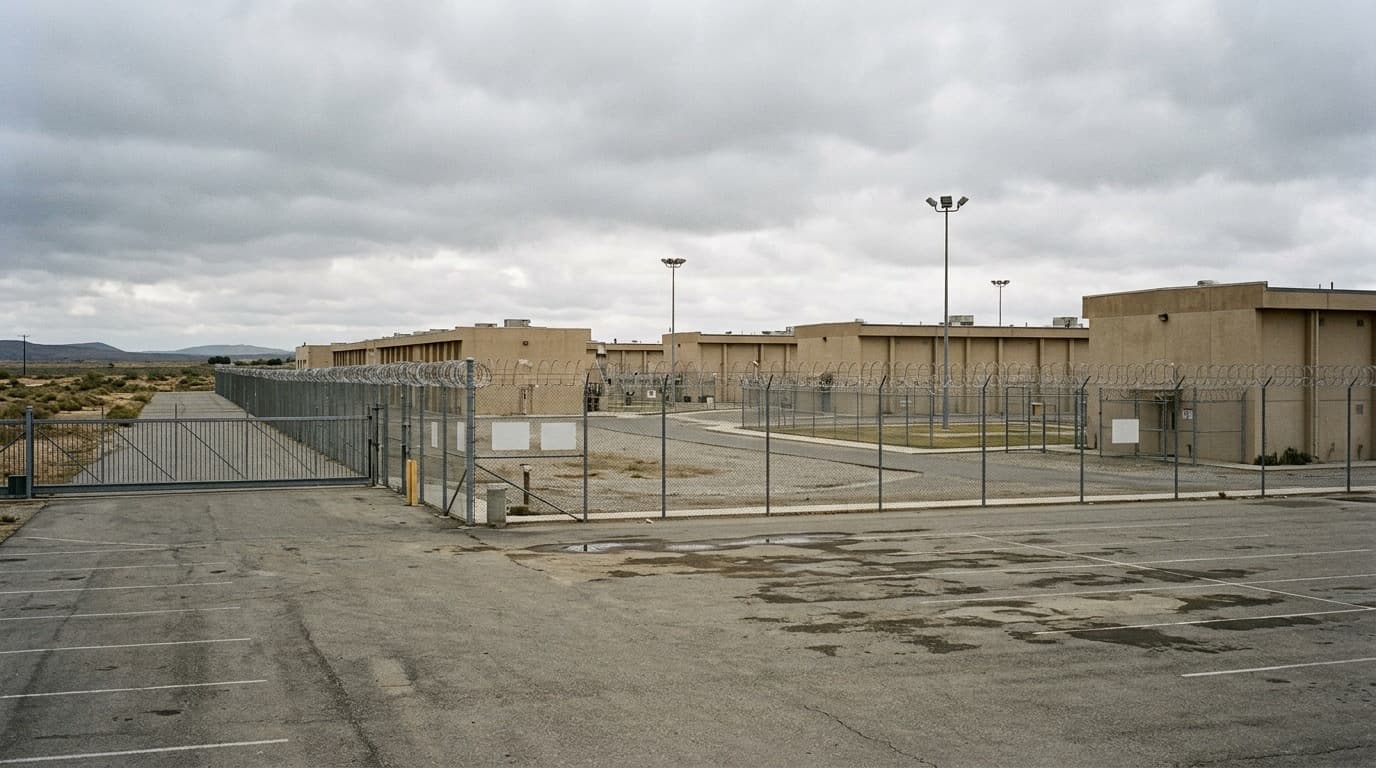
CoreCivic runs the Otay Mesa Detention Center in San Diego County, which holds 1,994 beds, and the California City Detention Facility in Kern County, the largest in the state at 2,560 beds. GEO Group runs five facilities statewide, including the Adelanto ICE Processing Center in San Bernardino County. Bloomberg Tax reported that GEO Group collects more than $140 million a year to run Adelanto and its Desert View facility combined, and more than $100 million for Golden State Annex and Mesa Verde combined, while CoreCivic collects roughly $130 million for California City and more than $138 million for Otay Mesa.
The bill leans on state inspection findings, not just cost. When the California Department of Justice inspected the California City facility shortly after it opened, investigators reported dangerous living conditions and a lack of adequate medical care, including too few doctors and insufficient hygiene supplies, according to a statement Haney's office released when it introduced the bill. A detainee held there before the bill existed told the advocacy group SIREN that guards took their belongings, from clothes and shoes to, in the detainee's words, their freedom, and that requests for eye medication went unanswered for days.
Why a tax, and not another ban
California already tried banning private detention outright. A 2019 law, AB 32, barred any private company from operating a detention facility in the state, immigration or otherwise. GEO Group sued, and in September 2022 the full Ninth Circuit Court of Appeals ruled 8 to 3 that the ban violated the Constitution's Supremacy Clause, because it let California override a federal decision to use private contractors for immigration detention, as JURIST reported. That ruling, not this year's politics, is why Haney's bill taxes the companies instead of shutting them down. A tax regulates what a facility costs to run. A ban tells the federal government it cannot use a facility at all, the part the Ninth Circuit said California cannot do.
“Corporations running these facilities are being paid hundreds of millions to detain people in cruelty right here in California, and it has to end.”
What the industry already told investors
Neither company has filed a legal challenge to AB 1633 as of this writing. But GEO Group flagged the bill as a financial risk in disclosures to the Securities and Exchange Commission while it still carried the 50 percent rate, telling investors the legislation could affect its operations and cash flow, Bloomberg Tax reported. The final 25 percent rate applies to the same gross income base the company warned about, just at half the amount.
A second, smaller bill hits one facility's tax break
Newsom signed a related but separate bill, SB 420, on October 1. It strips the Imperial Regional Detention Facility in Calexico of the Welfare Exemption, a property tax break meant for charities, which the facility's nonprofit operator had used to avoid at least $6 million in local property taxes, according to KPBS. State Sen. Steve Padilla, D-San Diego, who wrote the bill, said California closed this loophole so tax dollars go back into the community, not private detention profiteers. Assemblymember Jeff Gonzalez, a Republican representing Imperial County, framed his position in fairness terms rather than immigration policy, arguing the real question was whether the tax code applied evenly. The exemption change is not retroactive. The facility's operator does not have to repay taxes it already avoided.
What happens between now and 2028
AB 1633 does not take effect for another 21 months, which gives both companies time to plan around a new cost, or to do what GEO Group's 2022 lawsuit did and ask a federal court to decide whether a state can reach into a federal contractor's revenue this way. No other state currently taxes private detention operators the way California just did, so there is no second case to measure this one against yet. Whether a 25 percent tax on gross income survives the same Supremacy Clause argument that killed the 2019 ban is a question nobody has answered, including the lawyers who will eventually have to answer it.
- California
- ICE detention
- AB 1633
- GEO Group
- CoreCivic
- Gavin Newsom
Sources
- 01AB-1633 Bill Text and History, Taxation: Private Detention Facilities, California Legislative Informationleginfo.legislature.ca.gov
- 02California Just Made History Taxing ICE Detention Centers, Here's What Changes, Latin Timeslatintimes.com
- 03Newsom signs bill revoking charity tax break for Imperial County ICE detention center, KPBSkpbs.org
- 04New First-in-the-Nation California Bill Targets Corporations Profiting from ICE-Funded Immigration Detention Centers, Office of Assemblymember Matt Haneyhaney.asmdc.org
- 05Governor Newsom Signs First-in-the-Nation Tax on Private Immigration Detention Corporations, California Immigrant Policy Centercaimmigrant.org
- 06California Targets Private Detention Industry With New Taxes, Bloomberg Taxnews.bloombergtax.com
- 07US appeals court strikes down California law prohibiting privately-owned detention centers, JURISTjurist.org
Corrections
No corrections have been made to this article.

About the reporter
Politics & Policy Reporter, Trestlewire
I cut my teeth covering a state legislature, which is a slower education than it sounds. Most of what actually changes people's lives happens in a committee markup at eleven at night, or in an agency rulemaking docket that nobody reads except the people it will affect — not in the thirty-second clip that makes the evening news. I spent years in statehouse press rooms learning to read a bill the way a lawyer does, line by line, because that is the only way to know what it actually does.
Read full bio and all stories →