Three Bills Would Stop the Navy From Renaming the USS Doris Miller for Trump
Sen. Cory Booker introduced all three Sept. 30 with no cosponsors, aimed at a carrier rename the Navy has only discussed internally and never formally announced.

By Jonah Reyes, Politics & Policy
· 3 min read · Updated
Key Takeaways
- •Sen. Cory Booker introduced three bills, S. 5678, S. 5679 and S. 5680, on Sept. 30, 2026, and the Senate referred all three to the Armed Services Committee the same day.
- •One bill would for the first time require the Navy to adopt a formal, written process for naming vessels; currently the decision rests entirely with the secretary of the Navy.
- •A second bill would bar naming any Navy ship for a sitting president or vice president, a restriction with no precedent in U.S. Navy history.
- •The decision on whether to rename CVN-81 rests with Defense Secretary Pete Hegseth and acting Navy Secretary Hung Cao, who have not announced one as of this writing.
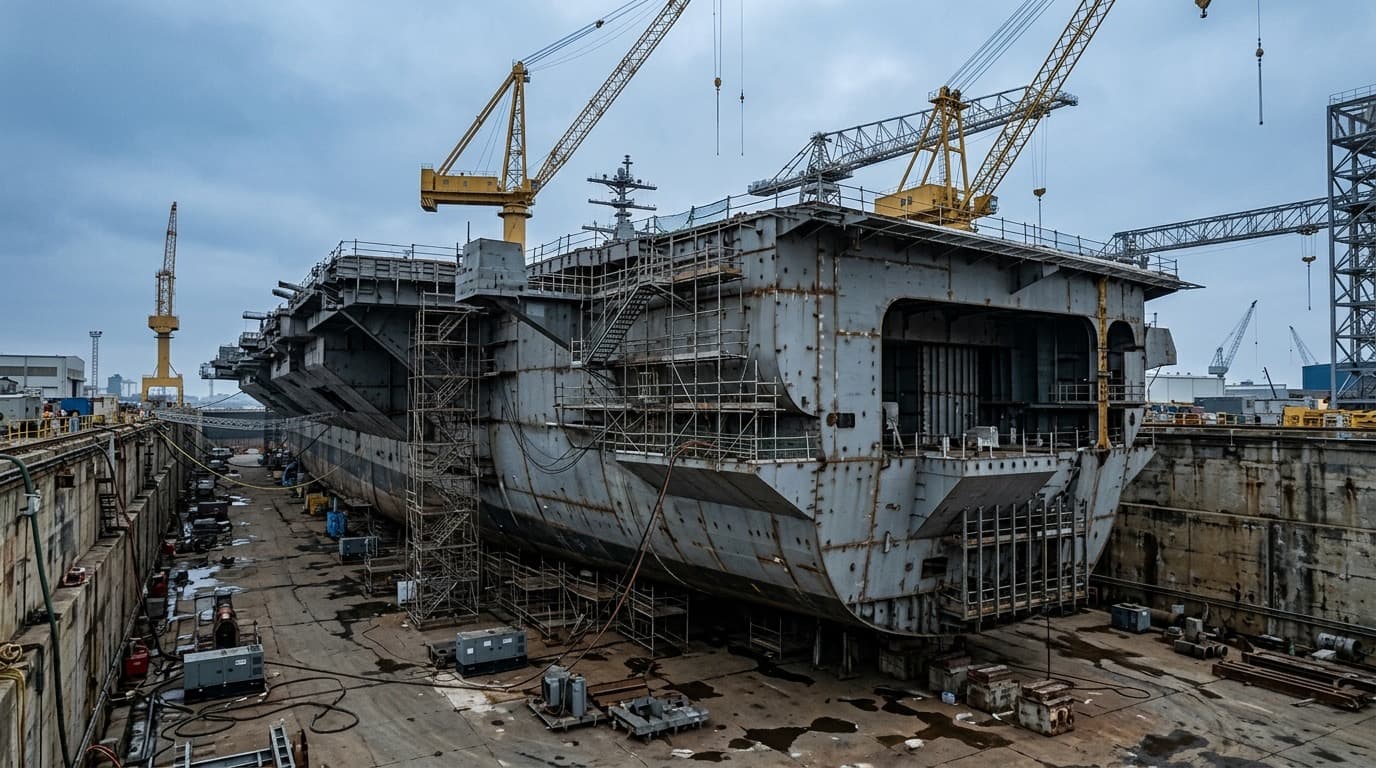
- •CVN-81 is still under construction at Newport News Shipbuilding and isn't planned to enter service until 2034.
Three bills now sitting in the Senate Armed Services Committee would block the Navy from stripping the name USS Doris Miller from aircraft carrier CVN-81 and replacing it with Donald Trump's. Sen. Cory Booker, D-N.J., introduced S. 5678, S. 5679 and S. 5680 on Sept. 30, 2026. The Senate referred each to committee the same day. None has a cosponsor, and none has a hearing scheduled.
The short answer
Three bills introduced by Sen. Cory Booker on Sept. 30 and referred to the Senate Armed Services Committee the same day would require the Navy to adopt a written ship-naming process, bar naming any vessel for a sitting president or vice president, and block federal funds from renaming CVN-81 away from USS Doris Miller. None has a cosponsor or a scheduled hearing. The Navy has never formally proposed the rename; two officials told NBC News in August that the idea has circulated internally for months, with the decision resting with Defense Secretary Pete Hegseth and acting Navy Secretary Hung Cao.
What the three bills actually do
S. 5680 is the narrowest: it would prohibit federal funds from being used to rename, redesignate or otherwise change CVN-81's name away from USS Doris Miller. S. 5679 goes further, barring the naming or renaming of any Navy vessel for a person serving as president or vice president, a rule that would outlast this one ship and this one administration. S. 5678 is procedural: it would require the secretary of the Navy to establish a formal process for naming vessels, a process that, as of this writing, does not exist in statute. Right now, naming a warship is entirely the secretary's call.
A decision that hasn't been made, in public
CNN first reported the internal discussion in August 2026. NBC News confirmed it separately, citing two U.S. officials who said the Navy had been weighing the change for several months. Those officials put the decision in the hands of Defense Secretary Pete Hegseth and acting Navy Secretary Hung Cao. Neither has announced one. Military.com reported that the Pentagon, the Navy and the White House all declined to respond to requests for comment on Booker's bills.
2034
CVN-81's planned commissioning year
The carrier is still under construction at Newport News Shipbuilding in Virginia. Its keel laying was expected in January 2026, with launch planned for October 2029, years before the ship would actually enter service.
The sailor whose name is on the ship
Doris Miller was a messman, the Navy's lowest enlisted rank in 1941, aboard the USS West Virginia when Japan attacked Pearl Harbor on Dec. 7. After the ship's anti-aircraft gun crew was killed or wounded, Miller, who had no weapons training, manned the gun himself. He is credited with downing at least one enemy aircraft and pulling wounded sailors to safety before the ship was abandoned.
Adm. Chester Nimitz awarded him the Navy Cross in 1942. He has never received the Medal of Honor, despite decades of advocacy for an upgrade. NBC News reported in August that Miller is now separately under consideration for the Medal of Honor, a decision the White House has not approved.
Why the bills probably stall anyway
Republicans control the Armed Services Committee, and none of the three bills has drawn a Republican cosponsor, or a Democratic one. Naming a Navy ship after a sitting president would be unprecedented; no U.S. warship has ever carried one's name while that person held office. That history is part of what Booker is arguing from.
“No president should ever christen or rename a warship in his own honor, and no American hero should be erased to make room for one.”
If the Navy moves to rename the carrier before any of the three bills clears committee, the dispute would shift to federal funding restrictions and litigation rather than legislation. If the bills stall, which is the more likely outcome for a single-sponsor package in a chamber the sponsor's party does not control, the decision stays exactly where it has sat for months: with Hegseth and Cao, neither of whom has said anything in public.
- Cory Booker
- Navy ship naming
- USS Doris Miller
- CVN-81
- Pete Hegseth
Sources
- 01New legislation aims to block renaming aircraft carrier after Trump, NBC Newsnbcnews.com
- 02Navy discusses renaming aircraft carrier after Trump instead of heroic Black sailor, NBC Newsnbcnews.com
- 03Bill Would Block Navy From Replacing Carrier's Doris Miller Name for Trump's, Military.com (via Yahoo News)yahoo.com
- 04S. 5680 bill status, 119th Congress, Library of Congress / GovInfo.govgovinfo.gov
- 05USS Doris Miller (CVN-81), Wikipediaen.wikipedia.org
Corrections
No corrections have been made to this article.

About the reporter
Politics & Policy Reporter, Trestlewire
I cut my teeth covering a state legislature, which is a slower education than it sounds. Most of what actually changes people's lives happens in a committee markup at eleven at night, or in an agency rulemaking docket that nobody reads except the people it will affect — not in the thirty-second clip that makes the evening news. I spent years in statehouse press rooms learning to read a bill the way a lawyer does, line by line, because that is the only way to know what it actually does.
Read full bio and all stories →