The Air Force Has Burned Bombs on a Guam Beach Since 1982. The Supreme Court Took Up the Case Today.
In Department of the Air Force v. Prutehi Guahan, the justices considered October 7 whether a Guam advocacy group's lawsuit over open-air munitions disposal on a beach above the island's main aquifer can proceed without the environmental review federal law normally requires first.

By Jonah Reyes, Politics & Policy
· 4 min read · Updated
Key Takeaways
- •The Supreme Court heard oral argument October 7, 2026, in Department of the Air Force v. Prutehi Guahan, No. 25-579, over open-air munitions disposal on Guam's Tarague Beach.
- •The Air Force has burned or detonated surplus munitions at the site since 1982; open burning stopped in 2002, but detonation continues under a RCRA permit still pending renewal since 2021.
- •Tarague Beach sits above the aquifer supplying more than 80 percent of Guam's drinking water and is nesting habitat for endangered green sea turtles.
- •A divided Ninth Circuit panel ruled in February 2025 that Prutehi Guahan's lawsuit could proceed, which led the Solicitor General to appeal to the Supreme Court.
- •Amicus briefs split along institutional lines: the U.S. Chamber of Commerce and West Virginia back the Air Force, while the Virgin Islands Bar Association and Washington state back Prutehi Guahan.
The Air Force has destroyed expired and unstable munitions on Tarague Beach at Andersen Air Force Base in northern Guam by burning or detonating them in the open since 1982. On October 7, the Supreme Court heard arguments over whether the Air Force can keep renewing the hazardous-waste permit that allows this without first completing the kind of environmental review federal law normally requires before a major project goes forward.
The short answer
In Department of the Air Force v. Prutehi Guahan, No. 25-579, the justices are deciding whether the Air Force's application to renew its Guam detonation permit is a final decision courts can review now, and whether the agency had to complete a review under the National Environmental Policy Act before applying, rather than relying on narrower hazardous-waste rules alone. The court typically rules on October arguments by the following June.
What happens on the beach
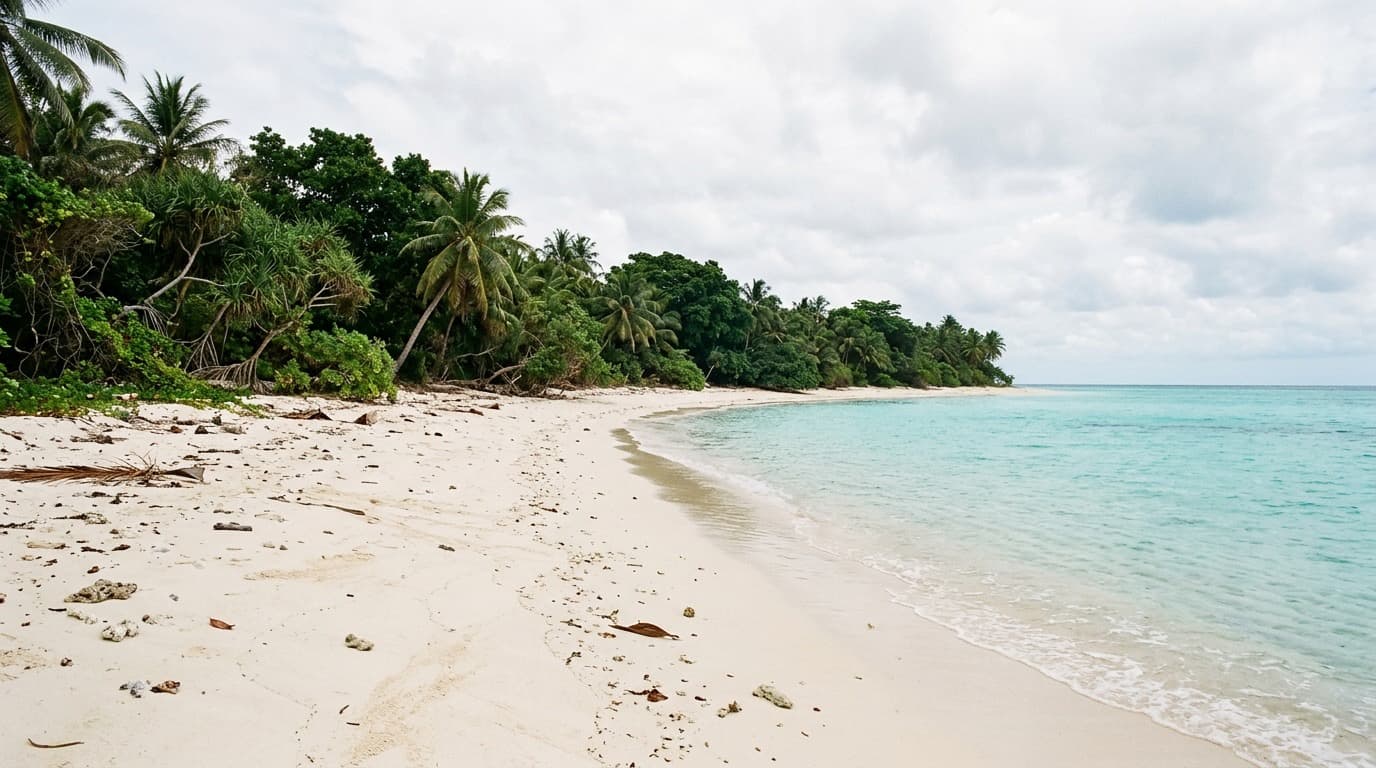
Tarague Beach sits above the aquifer that supplies more than 80 percent of Guam's drinking water, according to Prutehi Guahan's Supreme Court filings, and serves as nesting habitat for endangered green sea turtles and migratory seabirds. Before World War Two it was Chamoru land used for coconut cultivation and fishing. The military seized roughly two-thirds of Guam's land after the war and today controls about a third of the island, including Andersen Air Force Base. The Air Force has held open burn and open detonation permits for munitions there since 1982. Open burning stopped in 2002, but detonation continues under the Resource Conservation and Recovery Act, or RCRA, permit Guam's environmental regulator has neither approved nor denied since the Air Force applied to renew it in 2021.
80%+
of Guam's drinking water
comes from the aquifer beneath Tarague Beach, per Prutehi Guahan's filings with the Supreme Court.
The case turns on timing, not the bombs themselves
Prutehi Guahan, a Guam-based environmental group, is not asking the court to ban detonation outright. It sued the Air Force in federal court in Guam in January 2022, arguing the agency should have prepared a full environmental impact statement before applying to renew its RCRA permit, or at minimum before Guam's Environmental Protection Agency acted on that application. A federal district court dismissed the suit. A divided three-judge panel of the Ninth Circuit reversed that dismissal in February 2025 and let the case proceed, which is what brought the government to the Supreme Court.
Solicitor General D. John Sauer told the court the permit application is simply the initial step of an ongoing regulatory process that carries no binding legal consequences until Guam's regulator acts on it, and that RCRA's detailed, waste-specific procedures were written to cover exactly this kind of decision, leaving no separate role for the National Environmental Policy Act's broader review requirement.
“We deserve justice for the harms that we continue to endure.”
Flores, who has also led Prutehi Guahan's public comment campaigns on a proposed military cultural agreement and on deep-sea mining proposals near the Mariana Islands, says a win for the Air Force would mean more years of disposal continuing before anyone outside the agency has formal standing to weigh in. Guam's EPA has held the permit application without a final decision since issuing a preliminary notice in October 2021, five years ago.
Why other territories are watching
The amicus briefs split along familiar institutional lines. The U.S. Chamber of Commerce, the state of West Virginia and the Foundation for American Innovation filed in support of the Air Force's position that a permit application should not be reviewable in court until the regulator acts on it, a rule that would reach any federal permit application, not just this one. Washington state, the environmental group Blue Ocean Law, a group of House members led by Representative Jared Huffman of California, Guam-based community organizations, and the Virgin Islands Bar Association filed on Prutehi Guahan's side. The Virgin Islands Bar Association's filing in particular signals that a ruling built on Guam's status as a U.S. territory could shape how the National Environmental Policy Act applies to federal projects in American Samoa, Puerto Rico and the U.S. Virgin Islands as well.
Neither side disputes that destroying unstable military ordnance carries real safety tradeoffs, which factor into how and where it gets disposed of. A 2018 National Academies report, cited in Prutehi Guahan's briefing, found technically viable, less polluting alternatives to open burning and detonation exist, though the report did not weigh in on the specific cost or timeline of switching Guam's operation over to one of them. The dispute now before the court is narrower than a decision on munitions policy: it is about which federal statute, and whose review, has to come first.
A ruling is not expected before the court's current term ends, typically in late June. Until then, the RCRA permit Guam's regulator has yet to formally approve or deny remains the Air Force's legal basis for continuing to detonate munitions on Tarague Beach.
- Supreme Court
- Guam
- Prutehi Guahan
- NEPA
- Air Force
- environmental law
Sources
- 01Court to hear argument in dispute over Air Force's detonation operations in Guam, SCOTUSblogscotusblog.com
- 02Supreme Court Will Consider Case Challenging U.S. Air Force's Decision to Blow Up Bombs on the Beach in Guam, Earthjusticeearthjustice.org
- 03Department of the Air Force v. Prutehi Guahan (25-579), case docket, SCOTUSblogscotusblog.com
- 04The Supreme Court takes up a Guam munitions case with high stakes for Chamoru lands, Grist (via Yahoo News)yahoo.com
Corrections
No corrections have been made to this article.

About the reporter
Politics & Policy Reporter, Trestlewire
I cut my teeth covering a state legislature, which is a slower education than it sounds. Most of what actually changes people's lives happens in a committee markup at eleven at night, or in an agency rulemaking docket that nobody reads except the people it will affect — not in the thirty-second clip that makes the evening news. I spent years in statehouse press rooms learning to read a bill the way a lawyer does, line by line, because that is the only way to know what it actually does.
Read full bio and all stories →