The Pentagon Erased a 2013 Voter Checkbox in August. The DNC Sued Over It October 1.
A Federal Post Card Application option that let citizens who never lived in the U.S. register overseas through family ties disappeared in late August, cleared by OMB in days under emergency authority. The Democratic National Committee sued October 1, arguing the Pentagon manufactured the emergency to dodge the normal public-comment process before the midterms.

By Jonah Reyes, Politics & Policy
· 4 min read · Updated
Key Takeaways
- •The Pentagon removed a 2013 voter-eligibility checkbox from the Federal Post Card Application in late August 2026, cutting a declaration option for citizens who have never lived in the United States.
- •The Office of Management and Budget approved the change on an emergency basis within days of an August 13 letter from Deputy Under Secretary of Defense Sean O'Keefe citing voter confusion.
- •The Democratic National Committee sued the Pentagon and OMB on October 1, 2026, in the U.S. District Court for the District of Columbia, alleging the change violated the Administrative Procedure Act.
- •States faced a September 19, 2026 federal deadline to mail overseas midterm ballots, meaning ballots built on the new form were already sent before the DNC's lawsuit was filed.
- •Republican-aligned litigation has targeted the same voter category since 2024, winning in North Carolina, losing twice in Michigan, and remaining open in at least five other states.
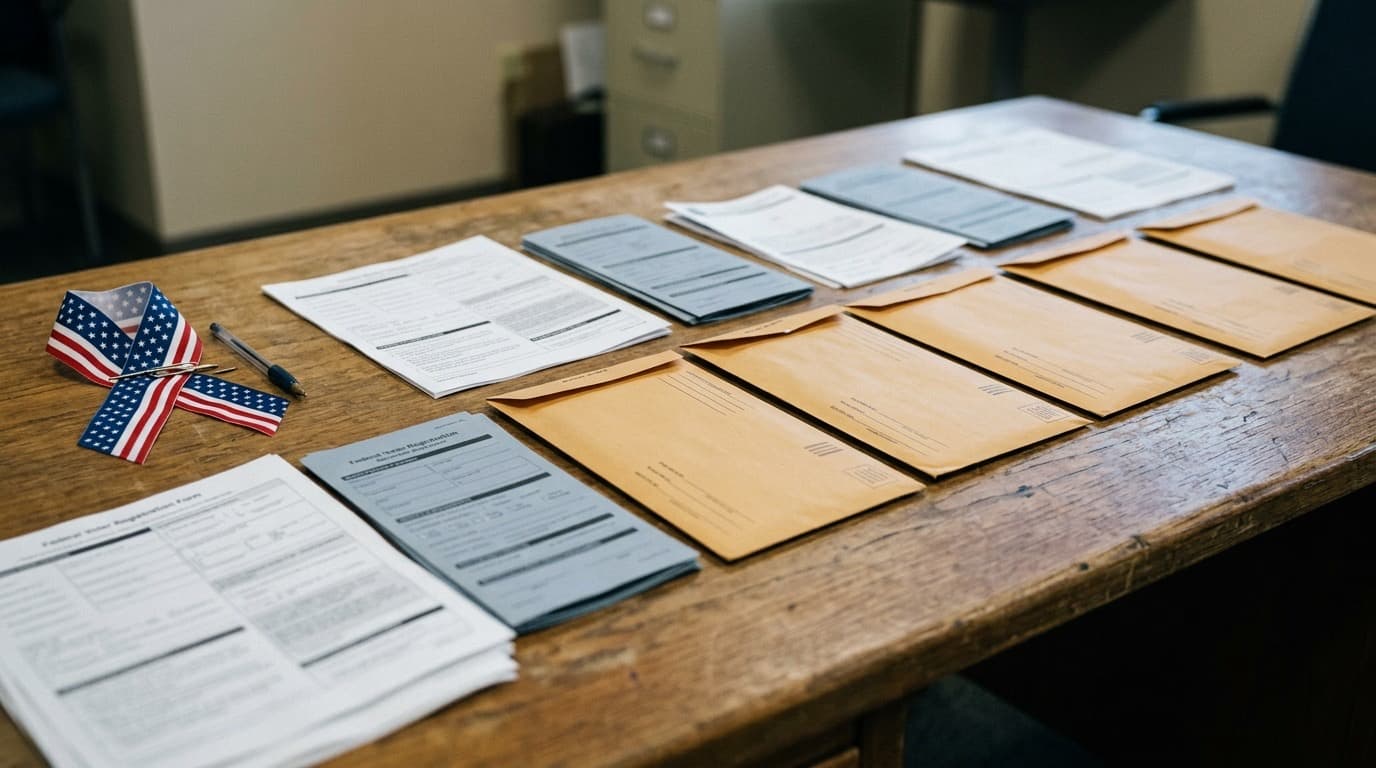
The Pentagon removed a checkbox from the Federal Post Card Application in late August, cutting the declaration that let citizens who have never lived in the United States register to vote overseas through family ties to a state. The form, used by military families and civilian expatriates alike, has carried that option since 2013. The Office of Management and Budget approved the change within days, under an emergency designation that skipped the public comment period the form normally requires.
The short answer
The Federal Post Card Application and its companion write-in ballot no longer ask overseas citizens whether they have never lived in the United States. Both remaining options now require a sworn declaration about returning to the country. The Pentagon pushed the change through under emergency authority in late August, weeks before the September 19 deadline for states to mail midterm ballots. The Democratic National Committee sued October 1, arguing the change violated the Administrative Procedure Act.
What the checkbox used to do
The removed option let an applicant declare that they were a U.S. citizen living outside the country who had never lived in the United States. At least 38 states and the District of Columbia allow citizens in that category to register and vote using the address of a parent or a state they have ties to, with no requirement to have ever set foot there. The two options that remain now ask applicants to swear either that they intend to return to the United States or that they are uncertain whether they will.
38
states plus D.C. let citizens who've never lived there register through family ties
That is the population the removed checkbox covered, per reporting on the DNC's complaint.
The emergency that triggered it
Sean O'Keefe, the deputy under secretary of defense for personnel and readiness, laid out the justification in an August 13 letter: the prior version of the form, he wrote, may have confused voters about their own eligibility, and with the election fewer than 90 days away, the normal notice-and-comment process would likely cause public harm. OMB granted the emergency request almost immediately. A public comment period opened September 10, after the form had already changed and after ballots using it had started going out. States faced a September 19 federal deadline to mail midterm ballots overseas.
What the people who run this process are saying
Bob Carey, a former director of the Pentagon's Federal Voting Assistance Program, said he added the checkbox in 2013 without expecting it to matter much. He said a change this size called for the opposite of a quiet rollout: "If I was the under secretary of defense for personnel readiness, to which FVAP reports, or the secretary of defense, I'd be calling up the director and saying, 'Spam the crap out of everyone.'"
“What were the voices prompting this change? Where did this come from? Military families are stakeholders who should have been included, because we can speak most authoritatively on what truly causes confusion with these forms and what doesn't. That's our form you're messing with. And you didn't even ask us for the input. It's just very insulting.”
Susan Dzieduszycka-Suinat, president and CEO of the U.S. Vote Foundation, which helps overseas citizens fill out the form correctly, said the replacement language will likely cause more confusion, not less. "It's hard to ignore the fact that a spotlight has been shown onto this particular slice of voters," she said. "And it's very concerning that they've simply been wiped off the form without discussion."
Part of a longer fight, not a one-off
Republican-aligned plaintiffs have been suing to exclude the same never-lived-in-the-U.S. voter category since 2024, with a mixed record: a successful challenge in North Carolina, two unsuccessful attempts in Michigan, and open cases in at least five more states, including Arizona, Colorado, Nebraska, Nevada, New Jersey, and Virginia. The Republican National Committee's own prior filings argued that this bloc of voters overwhelmingly favors Democratic candidates. The DNC's complaint turns that argument back on the Pentagon, alleging the agency "has proclaimed a transparently false 'emergency' to alter voter-registration materials without notice and comment in an effort to disenfranchise eligible American citizens."
What the lawsuit actually asks for
The DNC filed suit October 1 in the U.S. District Court for the District of Columbia, naming the Pentagon and OMB as defendants and asking the court to block further use of the altered form. The complaint does not undo ballots already mailed under the September 19 deadline. It targets how the form gets used going forward, which is why the case lands awkwardly: the ballots built on the new two-option form are already in voters' hands, and a ruling will not reach the ones already mailed.
The underlying OMB docket for this form, control number 0704-0503, was not independently reachable for this story; the account here rests on direct reporting from NPR and Democracy Docket on the August 13 letter and the DNC's complaint, not on the filings themselves.
A win for the DNC would not put the checkbox back on ballots already sent. It would decide whether the Pentagon can use the same emergency bypass again, on this form or another, the next time a deadline is close and a rule needs to move fast.
- Federal Post Card Application
- overseas voting
- Pentagon
- Democratic National Committee
- Administrative Procedure Act
- midterm elections
Sources
- 01Trump officials changed forms for overseas voters amid a GOP push to restrict voting, NPR / St. Louis Public Radiostlpr.org
- 02Trump admin quietly changed overseas voter form at 11th hour to disenfranchise Democrats, lawsuit says, Democracy Docketdemocracydocket.com
- 03Voter Registration and Absentee Ballot Request: Federal Post Card Application (FPCA), U.S. General Services Administrationgsa.gov
Corrections
No corrections have been made to this article.

About the reporter
Politics & Policy Reporter, Trestlewire
I cut my teeth covering a state legislature, which is a slower education than it sounds. Most of what actually changes people's lives happens in a committee markup at eleven at night, or in an agency rulemaking docket that nobody reads except the people it will affect — not in the thirty-second clip that makes the evening news. I spent years in statehouse press rooms learning to read a bill the way a lawyer does, line by line, because that is the only way to know what it actually does.
Read full bio and all stories →