A Judge Called Flock's Network 'Indiscriminate Mass Surveillance.' A Florida County Can't Find 11 of Its Cameras.
A federal judge in Oklahoma ruled a warrantless Flock database search was unconstitutional and suppressed 91 pounds of seized methamphetamine. Days earlier, a Florida county found 14 Flock cameras on its poles that nobody, including Flock, could fully explain.

By Mara Voss, Technology
· 4 min read · Updated
Key Takeaways
- •U.S. District Judge Sara E. Hill ruled October 1, 2026 that a Tulsa County deputy's warrantless Flock database search was unconstitutional, calling the network "a type of indiscriminate mass surveillance."
- •The ruling suppressed evidence from a stop that recovered 91 pounds of methamphetamine, marijuana, and $7,000 in cash from driver Melisa Kyle's SUV.
- •The Flock query had returned more than 50 sightings of Kyle's vehicle over roughly a month, reconstructing her travel history before officers had probable cause for a stop.
- •Flock Safety disputed the ruling and said it expects to appeal, calling it inconsistent with the "overwhelming weight of authority" from other courts.
- •Days earlier, St. Lucie County, Florida found 14 Flock cameras beyond its 52-camera contract; 11 remained unclaimed by any of the county's three law enforcement agencies as of early October.
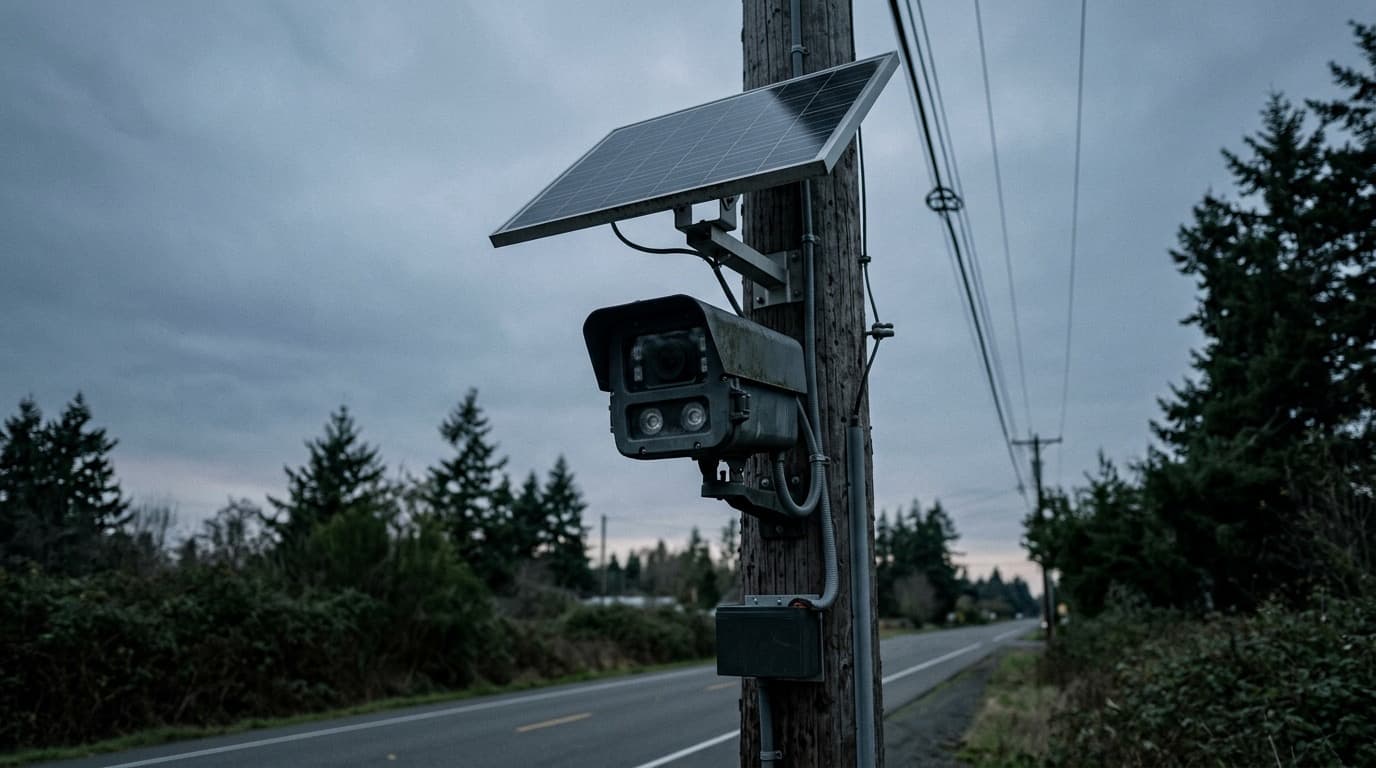
A federal judge in Oklahoma ruled on October 1 that a warrantless search of Flock Safety's license plate database violated the Fourth Amendment, calling the network "a type of indiscriminate mass surveillance." Three days earlier, officials in St. Lucie County, Florida, found 14 Flock cameras bolted to utility poles that neither the sheriff's office nor Flock could fully account for.
The short answer
U.S. District Judge Sara E. Hill ruled October 1 that a Tulsa County deputy's warrantless search of Flock's automated license plate reader system was unconstitutional, suppressing 91 pounds of methamphetamine seized in the stop that followed. Flock disputes the ruling and plans to appeal. It does not bind other courts, but it landed the same week a Florida county discovered 14 Flock cameras on its poles that nobody, including Flock, could explain.
91 lbs
of methamphetamine suppressed as evidence
The search that found it relied on a Flock database query a federal judge later ruled unconstitutional.
The search a judge called mass surveillance
The case is United States v. Kyle, filed in the Northern District of Oklahoma. Tulsa County sheriff's deputy and DEA task force officer Freddie Alaniz spotted a Mazda SUV with California plates on Interstate 44 in May and began following it without a traffic violation to justify the stop. He queried Flock's database for the vehicle, found more than 50 recorded sightings spanning roughly a month, and used that travel history to build a reason to pull the driver over for an unsignaled lane change.
The driver was Melisa Kyle, 46, of Crane, Missouri. Alaniz questioned her about where she had been while reviewing the Flock printout, then searched her SUV. Officers recovered about 91 pounds of methamphetamine, marijuana, and $7,000 in cash.
“This is a type of indiscriminate mass surveillance. The Fourth Amendment requires courts to draw a line when the cost is too great.”
Hill took the bench in January 2024 after serving as attorney general of the Cherokee Nation, becoming the first Native American woman on the federal bench in Oklahoma. Her ruling in Kyle's case is one of the first times a federal judge has found a Flock search itself, not just how an officer used the results, unconstitutional.
Hill ruled the Flock search was not supported by probable cause and was conducted without a warrant, and she suppressed the evidence the stop produced. Her opinion cited United States v. Knotts, the 1983 Supreme Court case that allowed police to track a vehicle's movements on public roads, and distinguished it from Flock's always-on camera network, which stores months of location history on any plate that passes a reader rather than tracking one car for one trip. She also noted a Fifth Circuit ruling from March, United States v. Porter, as evidence that federal courts have not settled where continuous camera surveillance crosses a constitutional line Knotts never anticipated.
404 Media, which first reported the ruling, said Flock disputed the decision and expects to appeal, arguing it conflicts with what the company called the "overwhelming weight of authority" from other courts that have allowed ALPR searches without a warrant. The ruling does not bind judges outside Hill's district, and 404 Media's reporting put the number of warrantless Flock searches nationwide at more than 100,000 a month, a volume this single case does nothing to slow.
The company doesn't have a reliable count of its own hardware either
St. Lucie County, Florida, contracted Flock for 52 cameras. A review this fall turned up 66 on county poles, according to TechSpot's reporting. The sheriff's office claimed three of the extra 14 as its own without explaining why they were never on the books. Eleven remain unclaimed by any of the county's three law enforcement agencies.
- County officials wrapped the 11 unclaimed cameras in plastic and posted removal notices with a deadline between October 16 and 20.
- One of the unclaimed cameras disappeared from its pole before crews arrived to take it down.
- TechSpot's reporting notes Flock has installed cameras in other states without permits on behalf of clients it has not named.
TechSpot also reported that hundreds of U.S. communities have canceled Flock contracts over privacy concerns, and that officers in multiple departments have been caught running ALPR searches to track people they knew personally rather than investigate a case.
Flock sells departments on a searchable, auditable record of where cars have been. A federal judge just found that record was built on a search method the Constitution does not allow. A Florida county, separately, could not say how many of the cameras producing that record were even supposed to be there. Flock is now defending both claims at once, and neither defense has anything to do with how good the technology is at reading a license plate.
- Flock Safety
- automated license plate readers
- Fourth Amendment
- surveillance
- St. Lucie County
Sources
- 01Federal Judge Rules a Flock Search Was 'Indiscriminate Mass Surveillance' and Unconstitutional, 404 Media404media.co
- 02Federal Judge Rules Flock License Plate Search Unconstitutional After Cop Followed Woman Over California Plate, Law Commentarylawcommentary.com
- 03A Florida county discovered 14 Flock cameras nobody authorized, and 11 remain unclaimed, TechSpottechspot.com
- 04Notice of Appointment, Judge Sara E. Hill, U.S. District Court, Northern District of Oklahomaoknd.uscourts.gov
Corrections
No corrections have been made to this article.

About the reporter
Technology Reporter, Trestlewire
I spent seven years as a product manager at a mid-size SaaS company before I ever wrote a sentence for pay, which means I have sat through more roadmap reviews than most people would tolerate in a lifetime. I watched a scheduling feature get rebranded three times before it shipped, and I watched a launch date slide past four straight quarters while the slide deck stayed exactly the same. That is where the question I still ask every day came from: does this actually ship, or is it a demo.
Read full bio and all stories →