Apple Owes $5.7 Billion Over Its Taptic Engine. That's a Decade-Old Shipped Feature, Not a Demo.
A San Diego jury ordered Apple to pay Taction Technology $5,721,961,750 for infringing two haptics patents, the largest patent verdict in U.S. history. The lawsuit was financed by the world's largest litigation funder, and Apple has a real track record of getting verdicts this size cut down on appeal.

By Mara Voss, Technology
· 5 min read · Updated
Key Takeaways
- •A San Diego federal jury ordered Apple to pay Taction Technology $5,721,961,750 on September 25, 2026, for infringing two Taptic Engine patents, the largest patent verdict in U.S. history.
- •The jury found the infringement was not willful, blocking tripled damages, and rejected Apple's argument that the patent claims were invalid.
- •Taction's lawsuit was financed by an indirect subsidiary of Burford Capital, the world's largest publicly traded litigation funder, according to Bloomberg Law's review of court filings.
- •Apple has a documented history of getting large patent verdicts reduced or thrown out on appeal, including a $625.6 million VirnetX award and a $1.1 billion Caltech verdict.
- •The case returns to U.S. District Judge Todd W. Robinson for post-trial motions before any appeal to the Federal Circuit.
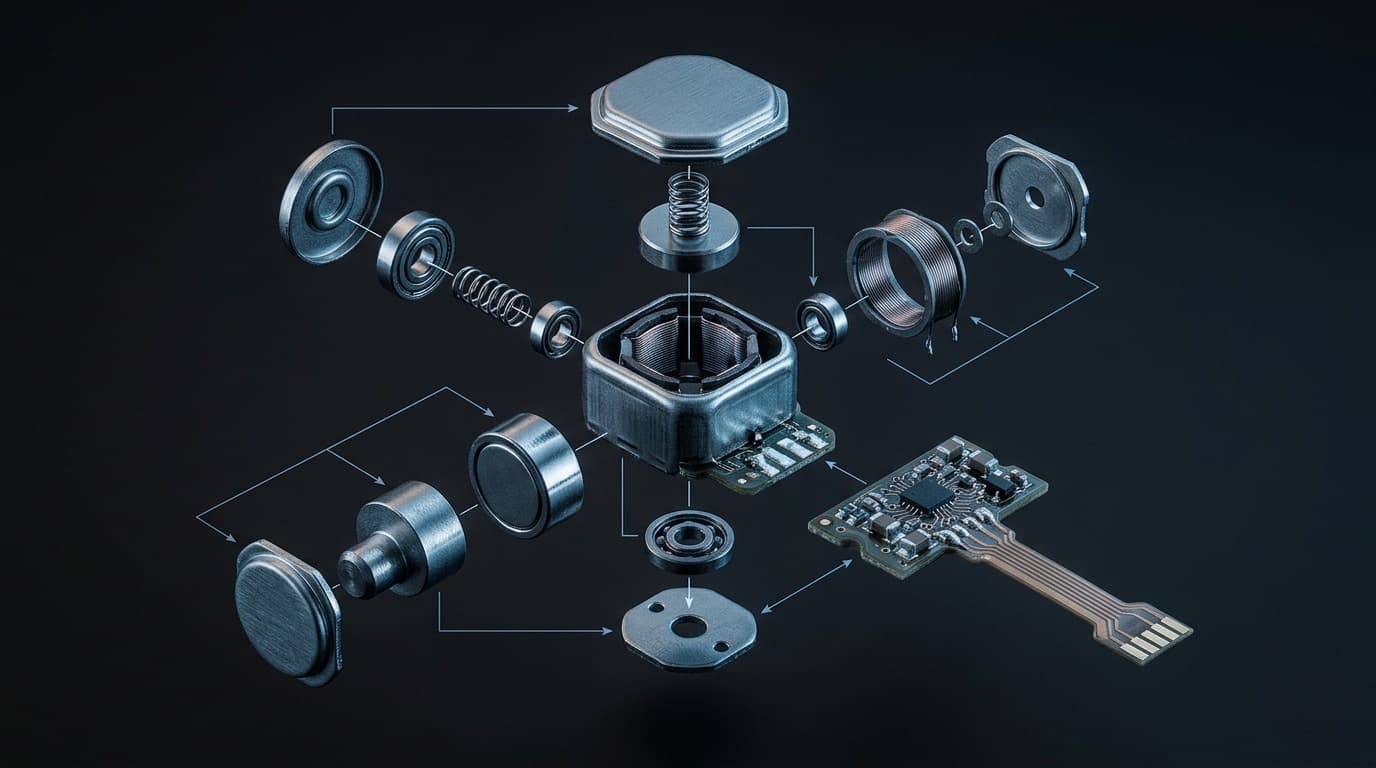
A federal jury in San Diego ordered Apple to pay Taction Technology $5,721,961,750 on Friday, the exact figure printed on the verdict form, for infringing two patents behind the Taptic Engine. That is the vibration hardware Apple has shipped inside every Apple Watch since 2014 and every iPhone since 2015. This was not a dispute about whether the feature works. Apple has sold it, in volume, for eleven years. The dispute was about who owns the mechanism inside it, and the jury sided with Taction on that question, not on whether Apple did it on purpose.
The short answer
A San Diego jury awarded Taction Technology $5.7 billion against Apple on September 25, 2026, finding the Taptic Engine infringes two of Taction's vibration patents. The jury found the infringement was not willful, which blocks tripled damages. The case now goes back to the trial judge for post-trial motions, and Apple says it will appeal. Court filings show Taction's suit was financed by an indirect subsidiary of Burford Capital, the publicly traded litigation funder.
$5,721,961,750
damages awarded to Taction Technology
More than double the prior record patent verdict, $2.54 billion, against Idenix in 2016.
Taction sued Apple in April 2021 in the U.S. District Court for the Southern District of California, arguing that Apple bought and reverse-engineered two of its "Kannon" headsets and built the resulting design into the Taptic Engine without a license. The two patents at issue, U.S. 10,659,885 and 10,820,117, cover tactile transducers that produce vibrations in the 40 to 200 Hz range, the band a person can actually feel through a screen or a watch case. Apple's version, according to court filings, moved from coil springs and a central locating rod to a newer design using flexures and ferrofluid, but the jury found it close enough to two claims in one patent and one claim in the other.
The case Apple had already won once
This is the second time a jury has looked at this dispute, sort of. U.S. District Judge Todd W. Robinson threw the case out on summary judgment in 2023, after excluding testimony from Taction's technical expert, Dr. James Oliver, and reading the patent claims narrowly. Taction appealed, and the Federal Circuit reversed in August 2025, ruling that Robinson had abused his discretion by excluding the expert's opinions and misreading the claims. The case went to trial on September 14, 2026. Seven jurors deliberated across two days and returned the verdict at 1:15 p.m. Pacific on September 25.
"While we thank the jury for their consideration, we strongly disagree with today's verdict and the damages awarded, which are entirely unsupported by the facts," Apple said in a statement to CNBC. "Apple's Taptic Engine is fundamentally different from Taction's technology, which Taction's own testing of Apple's products confirmed during trial. Apple does not use Taction's technology, and we will appeal." Taction's lead trial counsel, Lance Yang, a partner at Quinn Emanuel, told CNBC: "We're happy the jury found for Taction and vindicated its patent rights. Taction waited five and a half years for this case to get to trial, so it was a long time coming."
Who actually paid for this lawsuit
Discovery in the case surfaced something neither company's statement mentions: Taction's suit was bankrolled by Gronostaj Investments LLC and Kenosha Investments LP, which court filings in separate litigation identify as an indirect subsidiary of Burford Capital Ltd, according to Bloomberg Law. Burford is the largest publicly traded litigation finance firm in the world, and it does not fund cases out of goodwill. It takes a cut of the award. Apple's lawyers spent part of the trial trying to put that funding relationship in front of the jury; how much that mattered to the outcome is not something either side's public statements address, and neither company has said what share of the $5.7 billion Burford is owed. That is a real gap in what's known, not a detail this piece can fill in.
- Jury found infringement on two claims in patent 10,659,885 and one claim in 10,820,117.
- Jury found the infringement was not willful, which under federal patent law blocks Taction from collecting tripled damages.
- Apple failed to convince the jury that any of the three argued claims were invalid.
- The case, Taction Tech. Inc. v. Apple Inc., is No. 3:21-cv-00812 in the Southern District of California.
What Apple's appeal record actually says
The case now returns to Judge Robinson for post-trial motions, where Apple is expected to ask for a reduced award or a new damages trial before any Federal Circuit appeal. In 2018 the Federal Circuit erased a roughly $500 million verdict for the Wisconsin Alumni Research Foundation, ruling jurors had no reasonable basis to find infringement. A Texas judge threw out a $625.6 million VirnetX verdict over FaceTime and iMessage patents and ordered a new trial. The Federal Circuit sent a $300 million Optis Cellular award back for a third trial, and separately wiped out a $1.1 billion Caltech verdict over a faulty damages theory. Apple is also currently appealing a $634 million verdict Masimo won in November 2025 over Apple Watch health-sensor patents. None of that guarantees this verdict shrinks, but a jury number and a collected check have not been the same thing for Apple lately.
The number that matters here isn't $5.7 billion. It's whatever survives post-trial motions and a Federal Circuit review that has cut similar awards before, sometimes to zero.
- Apple
- Taction Technology
- patent litigation
- Taptic Engine
- Burford Capital
- Federal Circuit
Sources
- 01Apple faces $5.7 billion patent infringement verdict over iPhone and Apple Watch haptics, CNBCcnbc.com
- 02Apple owes Taction $5.7B after losing haptic feedback IP trial, AppleInsiderappleinsider.com
- 03Apple Owes $5.7 Billion for Infringement of Haptics Patents, Bloomberg Lawnews.bloomberglaw.com
- 04Why Apple's record $5.7B patent verdict may never get paid, Cryptopolitancryptopolitan.com
Corrections
No corrections have been made to this article.

About the reporter
Technology Reporter, Trestlewire
I spent seven years as a product manager at a mid-size SaaS company before I ever wrote a sentence for pay, which means I have sat through more roadmap reviews than most people would tolerate in a lifetime. I watched a scheduling feature get rebranded three times before it shipped, and I watched a launch date slide past four straight quarters while the slide deck stayed exactly the same. That is where the question I still ask every day came from: does this actually ship, or is it a demo.
Read full bio and all stories →